Visa is positioning itself as the central nervous system for the nascent agentic commerce economy. By formalizing the Visa Intelligent Commerce platform — initially introduced as developer tools in April 2025 and expanded significantly in June 2026 — the world’s largest payment network is making a calculated infrastructure bet. If AI agents are to move from research assistants to autonomous purchasing entities, they require a standardized layer of trust, control, and connectivity that currently does not exist in the fragmented landscape of AI-driven commerce.
The platform’s architecture relies on a suite of tools designed to bridge the gap between machine-initiated intent and financial settlement. Central to this are the Agent Score and the Agentic Directory. The Agent Score, developed with New Generation, provides merchants with a metric to evaluate their website’s readiness for agentic interaction, essentially auditing whether an AI can successfully navigate and complete a transaction. The Agentic Directory serves as a verification layer, attempting to solve the mutual distrust problem by vetting both agents and merchants as legitimate participants. These tools function as a proprietary trust infrastructure for a market that is still largely theoretical.
Visa’s strategic collaboration with OpenAI further illustrates the mechanics of this push. By embedding the payment network directly into ChatGPT, Visa enables agents to initiate transactions using tokenized credentials, which replace sensitive card details with secure digital codes. To mitigate the inherent risks of autonomous spending, the system relies on user-defined guardrails, including spending limits, merchant category restrictions, and approved merchant lists. For now, the default remains a human-in-the-loop model, acknowledging that the industry is not yet ready to hand over full financial autonomy to large language models.
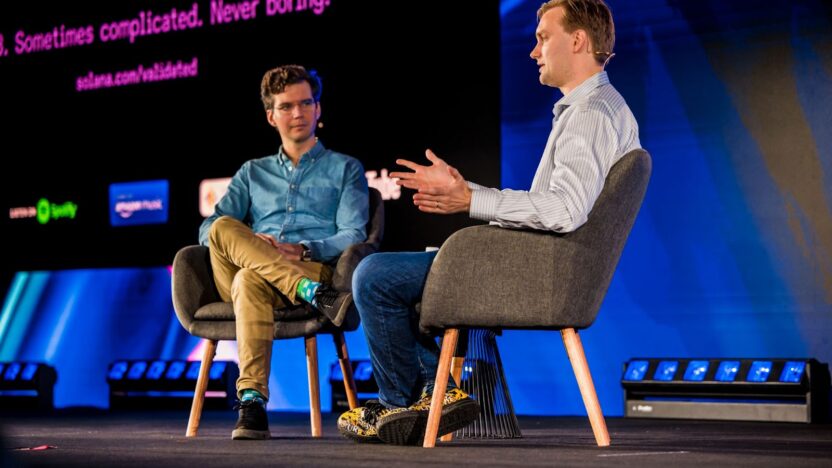
Visa CEO Ryan McInerney has been explicit about the primary hurdle facing this transition. During the Visa Payments Forum in San Francisco, he argued that the bottleneck is not computational capacity, but the psychological and structural barrier of trust. “As we introduce these new experiences, we’ve got to be equally focused on not just here’s the great new thing that consumers can do, but what do they reach for… for that sort of feeling of safety and trust so that they do want to engage in those new experiences.”
The push for adoption is already moving beyond the pilot phase. On July 2, 2026, at the Visa Payments Forum in Paris, the company announced the first live agentic payments in Europe, supported by a coalition of over 30 issuing banks. This rapid expansion suggests that Visa is eager to establish its rails as the standard before competing architectures — such as the card networks’ own AP4M, crypto-native stablecoin rails like x402 and MPP, or the cloud-based UCP models from AWS and Google — can gain significant traction in what is being dubbed the “Three-Rail War.”
However, the gap between Visa’s infrastructure ambitions and current consumer behavior remains stark. While Visa’s own research from October 2025 indicates that 47% of U.S. consumers use AI tools for at least one shopping task, the actual willingness to delegate financial authority is low. According to an April 2026 survey by Product.ai, only 14% of consumers who used AI for product research trusted those recommendations without manual verification. The remaining 86% insist on verifying the output before committing to a purchase, suggesting that the “agentic” part of agentic commerce is currently more of a research assistant than a purchasing agent.
This discrepancy highlights the central tension in Visa’s strategy. The company is building a sophisticated Large Transaction Model, trained on billions of data points to detect fraud in complex agentic flows, and is seeing growth in other areas, such as its stablecoin settlement volume, which reached a $7 billion annualized run rate as of April 29, 2026. Yet, there is no public audit or verified data confirming what fraction of these agent-initiated transactions represent actual buyer-seller commerce versus simple API plumbing and backend testing.
Visa is betting that by providing the plumbing — the scores, the directories, and the tokenized security — it can manufacture the trust necessary to unlock a new category of volume. It is a speculative capital expenditure, deploying infrastructure in anticipation of a market that has yet to materialize. Whether this platform becomes the standard for autonomous commerce or remains a sophisticated solution in search of a problem depends on whether the 86% of consumers who currently refuse to trust AI recommendations can be convinced to relinquish control. For now, the industry is watching a massive investment in infrastructure that is significantly ahead of demonstrated commercial demand.