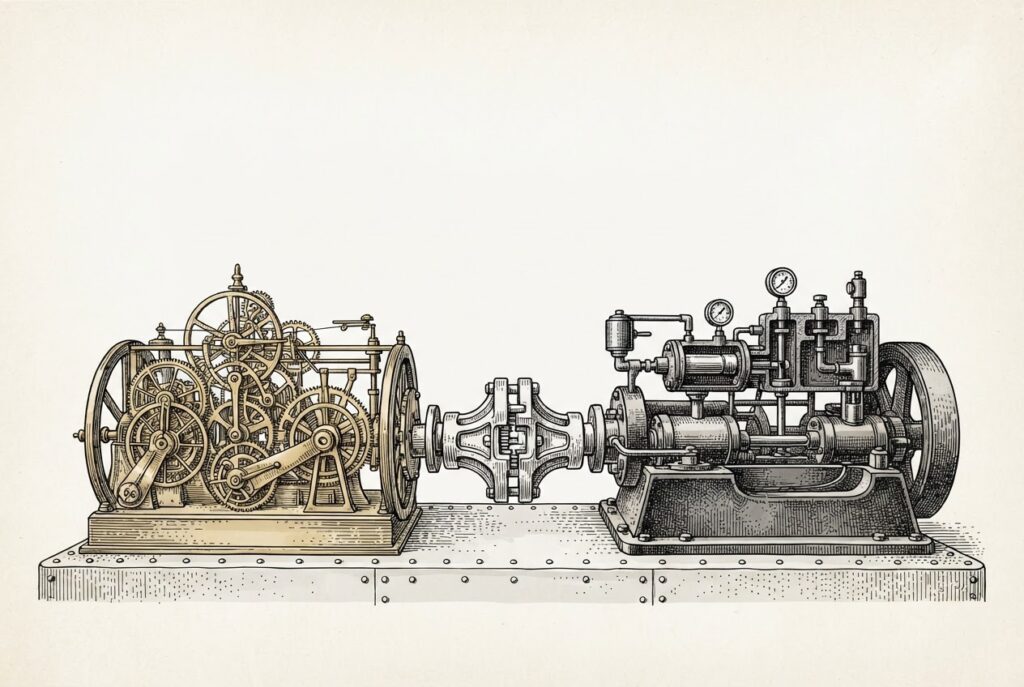
Salesforce and Google Cloud are abandoning proprietary agent silos in favor of the Model Context Protocol (MCP) as their primary interoperability layer. By adopting MCP, these two Fortune-100 entities are signaling that the future of enterprise AI infrastructure is not built on custom, brittle connectors, but on standardized, tool-based access. This is a structural shift that positions MCP as the foundational language for agent-to-data communication.
The prerequisite for this shift is Salesforce’s Headless 360 architecture, introduced earlier this year at TDX. By exposing every Salesforce capability—from Sales and Service to Finance and Advertising—as an API, MCP tool, or CLI command, Salesforce has effectively dismantled the proprietary wall that previously kept its data locked within its own ecosystem. When Google Cloud implements this headless architecture, it does not require a custom integration. Instead, Gemini Enterprise gains native, standardized access to Salesforce’s business context. As Kevin Ichhpurani, President of Global Partner Ecosystem at Google Cloud, noted:
Enterprise AI only pays off when agents can understand a company’s business context and act on it. By bringing Salesforce — where critical customer and business processes already live — into Gemini Enterprise, customers can build trusted agents that reason across their business context and securely take action. And with Hyperforce on Google Cloud, customers gain greater choice in how they deploy Salesforce on our AI-optimized infrastructure.
When the industry converges on a single protocol for tool access, the competitive advantage shifts away from who can build the best connector and toward who can provide the most sophisticated agent reasoning and business context integration. The infrastructure is becoming a utility, forcing vendors to compete further up the stack.
Perhaps the most significant technical evolution is how this integration handles security. Tableau MCP enforces row-level security and semantic models at the moment of the agent query. This is a departure from traditional, perimeter-based security models that often act as bolt-on layers. By inheriting existing Tableau permissions and enforcing them at runtime, the system ensures that AI agents are constrained by the same governance rules as human users. This confirms that governance is transitioning from an afterthought to an embedded infrastructure requirement.
The broader structural signals are reinforced by the deployment of UCP-powered checkout, which enables end-to-end purchasing directly within Google surfaces. Additionally, the migration of Hyperforce to Google Cloud is underway, with select U.S. migrations beginning in Q4 2026 and North American general availability in November 2026. SharkNinja is already leveraging these capabilities. As Evan Gerber, VP of AI at SharkNinja, stated:
By bringing Gemini Live’s real-time, multimodal capabilities together with Agentforce, we’re creating a new way for consumers to engage with SharkNinja throughout the life of a product.
Velia Carboni, CIO of SharkNinja, added:
With our products surfaced across Google surfaces and UCP enabled checkout on the results page, we shorten the path from discovery to purchase while keeping payments and order management on Commerce Cloud.
As Meir Amiel, Salesforce’s President and Chief Trust and Infrastructure Officer, noted:
What changes here is the infrastructure underneath our customers, not the trust they’ve built with us. Hyperforce running natively on Google Cloud will extend the same security, compliance, and resilience standards we hold ourselves to. Enterprises will get Google Cloud’s flexibility without giving up an inch of the trust bar they expect from Salesforce.
This shift aligns with the recent vendor rush toward agent governance, where companies like Okta, IBM, and Broadcom are racing to ship standalone products to manage agent behavior. It also mirrors the emergence of intent-based access control as a distinct infrastructure layer. The industry is clearly moving toward a model where governance is enforced at the point of execution rather than at the point of entry.
Infrastructure is becoming increasingly interoperable, yet platform competition is intensifying. Vendors are using these open standards to pull more business processes into their own ecosystems, creating a landscape where the underlying plumbing is shared, but the battle for the user’s business context and reasoning engine is more aggressive than ever. The challenge for enterprises will be navigating this duality: leveraging the benefits of a standardized, interoperable infrastructure while managing the risks of deeper platform lock-in.