On July 8, 2026, NVIDIA and LangChain introduced NemoClaw, an open-stack reference blueprint for building Deep Agents. Rather than chasing incremental gains in foundation model size, the architecture shifts the focus to the engineering of the systems that surround the model. For enterprise architects, this marks a departure from the model-centric development cycle, prioritizing the control and performance of the agent system itself.
NemoClaw consists of three distinct components: the LangChain Deep Agents Code, which serves as an open-source terminal coding agent; the Nemotron 3 Ultra model, paired with a specifically tuned Deep Agents harness; and the NVIDIA OpenShell secure runtime. This architecture is a direct challenge to the trend of closed-platform consolidation, offering a path for enterprises to maintain control over their agent systems while achieving high-level performance.
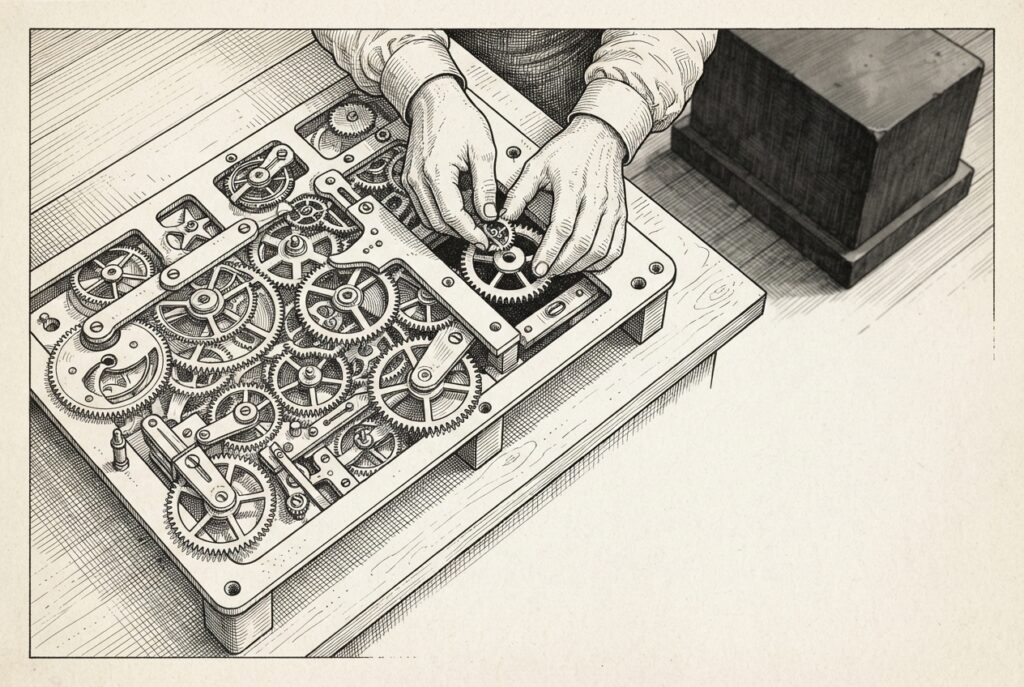
The deeper issue is how these agents actually function in production. Rather than relying on massive model retraining, the performance gains in the NemoClaw blueprint were achieved through meticulous harness engineering. By analyzing execution traces and iteratively adjusting system prompts, tool descriptions, and middleware, LangChain was able to optimize the Nemotron 3 Ultra model for specific tasks. This approach demonstrates that model behavior can be significantly improved through the environment in which it operates.
Harrison Chase, cofounder and CEO of LangChain, argues that the performance of an agent is a function of its surrounding infrastructure rather than the model in isolation:
The way to build better agents is to keep improving the system around the model. Memory, tool use, evaluation and model behavior compound when teams can tune them together. Our work with NVIDIA shows that enterprises can get strong performance from an open stack while keeping control over the agent systems they are building.Harrison Chase, LangChain
The enterprise appetite for this level of control is already evident. Companies such as Abridge, Amdocs, and Box are currently embedding specialized agents directly into their platforms. Furthermore, EY is expanding its implementation capabilities around NemoClaw blueprints, assisting clients in the customization, evaluation, and governance of specialized agents across high-value workflows. This adoption signals a move toward more modular, manageable, and secure agent architectures.
Security remains a central concern for these deployments, which is why the inclusion of the NVIDIA OpenShell runtime is significant. By providing deny-by-default networking, human approval gates, and audit logs, the blueprint addresses the practical requirements of enterprise architects who must balance innovation with risk management. This aligns with broader trends in the agent economy, where protocol consolidation and security are becoming as important as raw model capability.
It is important to note that the performance metrics associated with this blueprint are vendor-reported figures and have not been independently reproduced. According to these reports, Nemotron 3 Ultra achieved an aggregate score of 0.86 on LangChain’s Deep Agents evaluation suite at a cost of $4.48 per run. This is presented as a 10x reduction in inference cost compared to the next-closest model, which reportedly costs $43.48 per run. While these figures should be viewed with the appropriate caution, they are directionally meaningful given LangChain’s massive footprint, with over 200 million monthly downloads.
The NemoClaw blueprint demonstrates that business task parity with high-scoring closed models is achievable through harness engineering rather than model retraining. By prioritizing the environment over the training run, developers are building systems that are more transparent and efficient. This approach suggests that the future of enterprise AI will be defined by the ability to engineer robust, modular agent architectures.