IETF 126 Vienna Is Quietly Architecting the Three-Layer Stack for Agent Interoperability
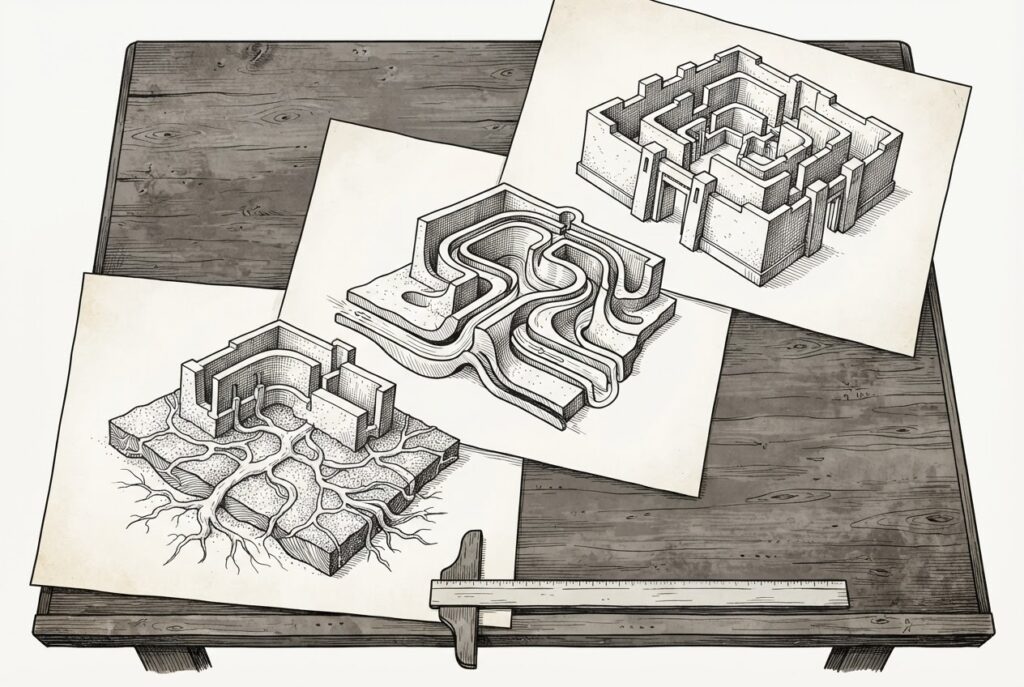
At IETF 126 in Vienna, the Internet Engineering Task Force is quietly architecting the foundational stack for autonomous agent interoperability. Rather than attempting to solve the entire agent ecosystem in a single monolithic protocol, the IETF is decomposing the challenge into three distinct, non-overlapping layers: discovery, communication, and secured collaboration. This structural separation represents a notable shift in agent infrastructure, yet it remains largely below the mainstream radar, with no significant discussion on social platforms like X.
The first layer, discovery, is addressed by the DAWN (Discovery of Agents, Workloads, and Named entities) BoF scheduled for July 21. DAWN focuses on the fundamental problem of how an AI agent finds another agent with specific capabilities. By utilizing a DNS-based approach, the charter aims to standardize entity classification, functionality, and security requirements while explicitly scoping out bulk data transfer or complex inter-entity communication. The proponents behind DAWN represent a notable geopolitical mix, including Huawei, China Mobile, Nokia, Deutsche Telekom, and Infoblox, signaling a broad international interest in establishing a baseline for agent visibility.
The second layer, communication, is the focus of the agentproto BoF on July 23. This session represents a critical decision point for the IETF, as the community will determine whether to charter a formal working group. The proposed scope is ambitious, targeting a standards-track AI Agent Session Protocol for long-lived, bidirectional sessions and an architectural framework. Crucially, the agentproto charter explicitly excludes discovery to avoid overlap with DAWN, demonstrating a disciplined approach to protocol design. It also explicitly coordinates with existing de facto standards, specifically the Model Context Protocol (MCP) and A2A protocols under the Linux Foundation.
The third layer, secured collaboration, is represented by the DMSC (Dynamic Multi-agent Secured Collaboration) BoF on July 22. This is the earliest-stage effort of the three, focusing on infrastructure-assisted multi-domain collaboration. The proposed architecture introduces an Agent-GW gateway concept, utilizing a management plane for policy, a control plane for registration, and a forwarding plane for semantic routing. While less mature than DAWN or agentproto, DMSC rounds out the stack by addressing the complexities of how agents interact once they have discovered each other and established a communication channel.
Separating discovery from communication allows developers to build specialized discovery mechanisms — such as the DNS-based approaches proposed in DAWN — without being forced to adopt a specific, heavy-duty communication protocol. Conversely, those building communication layers can rely on established transports like QUIC, WebTransport, or WebRTC, knowing that the discovery of their agents is handled by a separate, standardized process. This modularity moves the industry away from proprietary, siloed agent environments toward an interoperable stack.
The involvement of major telecommunications players from both Europe and Asia in the DAWN BoF indicates that the infrastructure for agent discovery is being viewed as a critical utility, similar to the early days of internet routing or DNS. This international participation is essential for creating a truly global, interoperable agent network that transcends regional or corporate boundaries.
The July 23 agentproto decision will be a significant indicator for the future of the agent stack. If the IETF moves to charter a working group, it will signal a formal commitment to standardizing the “plumbing” of agent-to-agent interaction. The inclusion of a tentative Agent-to-Agent (A2A) Protocol deliverable, contingent on open-source community buy-in, further underscores the IETF’s intent to integrate with, rather than replace, existing industry efforts like the Linux Foundation’s initiatives.
The IETF’s intent is to define clear boundaries between discovery, communication, and collaboration, providing a roadmap for developers to build agents that can operate across diverse networks and platforms. As these BoFs proceed in Vienna, the focus remains on creating a robust, standards-based foundation that will allow the next generation of autonomous systems to interact with the same reliability and ubiquity as the web itself.