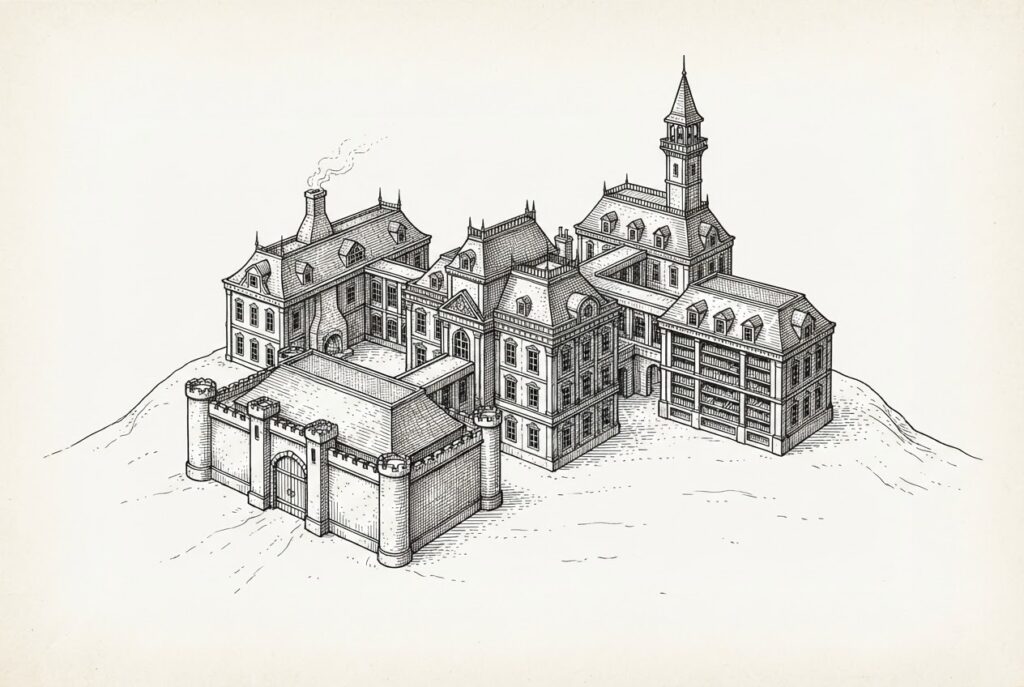
On July 10, 2026, Cloudflare wrapped up its inaugural Agents Week, a series of announcements that effectively codifies the transition from general-purpose cloud computing to agent-native infrastructure. By organizing the event around five distinct domains—Compute, Security, Agent Toolbox, Prototype to Production, and the Agentic Web—the company is moving beyond incremental feature releases to propose a new architectural standard for the AI era.
Cloudflare CTO Dane Knecht and VP of Product Rita Kozlov defined this shift as the arrival of Cloud 2.0. Their thesis is straightforward: we are entering a world where agents are the primary workload, not just a secondary application layer. This requires infrastructure that is inherently stateful, persistent, and capable of massive concurrency, moving away from the request-response models that have dominated the web for decades.
For developers, the most significant takeaway is the delivery of a unified stack that addresses the four-pillar framework—execution, memory, observability, and security—within a single vendor ecosystem. Previously, builders were forced to stitch together disparate services, creating integration friction and inevitable security gaps. Cloudflare has now integrated these pillars directly into its Workers platform, turning its edge network into a native environment for autonomous agents.
The execution layer is anchored by the general availability of Sandboxes, which provide persistent, isolated environments for agents to maintain filesystems and background processes. This is paired with Agent Memory, a managed service designed to help agents recall relevant information while discarding noise, and Cloudflare Mesh, which provides secure private networking via Workers VPC. This allows agents to interact with private databases and APIs without the need for manual tunnels, a critical step in reducing operational complexity.
Security is also being re-engineered for the agentic web. The introduction of Managed OAuth (RFC 9728) allows agents to authenticate on behalf of users without relying on insecure service accounts. Furthermore, as enterprises begin to adopt the Model Context Protocol (MCP), Cloudflare has introduced Shadow MCP detection within its Gateway. This feature is designed to identify and monitor unauthorized MCP server usage, providing visibility into how agents are accessing enterprise data—a necessary guardrail for production-ready deployments.
The scale of this infrastructure is perhaps its most aggressive feature. Cloudflare has rearchitected its Workflows engine to support a 50,000 concurrency limit, a massive leap intended to handle the tens of millions of simultaneous sessions that Knecht anticipates as knowledge workers begin running multiple agents in parallel. This capacity is essential for moving beyond simple prototypes to high-volume enterprise workloads.
The clearest evidence that Sandboxes have crossed from preview to production comes from Figma, which adopted the infrastructure for Figma Make—its tool for turning ideas into deployable applications. As Alex Mullans, who leads AI and Developer Platforms at Figma, told InfoQ: “We needed an infrastructure solution that could provide reliable, highly-scalable sandboxes where we could run untrusted agent- and user-authored code. Cloudflare Containers is that solution.” A marquee production user running live workloads carries different weight than vendor roadmaps or partner press releases.
This production adoption pattern mirrors the broader evolution in prior Forkast coverage—Google Agent Executor, ADK 2.0—where the industry shifted from providing simple SDKs to building comprehensive runtime substrates. Cloudflare is now making that same move, positioning itself as the platform provider for the agentic economy.
However, this convenience introduces a familiar tension: the trade-off between operational efficiency and platform lock-in. By providing a comprehensive, edge-native stack, Cloudflare creates a frictionless experience that is difficult to replicate with a multi-vendor approach. Yet, this integration comes at the cost of deep tethering to proprietary primitives, such as their specific implementation of Artifacts or AI Search. Developers must weigh the benefits of a batteries-included platform against the risks of becoming dependent on a single provider’s ecosystem.
The industry is now watching to see how this model performs under real-world stress. While the technical specifications—including the new Agents SDK and hybrid retrieval primitives like AI Search—are robust, the ultimate test will be whether this unified approach can maintain the reliability required for complex, long-running workflows compared to more specialized, distributed systems. Cloudflare has set a clear benchmark for what an agent-native cloud looks like, forcing a necessary conversation about whether the future of agent infrastructure lies in integrated stacks or modular, vendor-agnostic components.