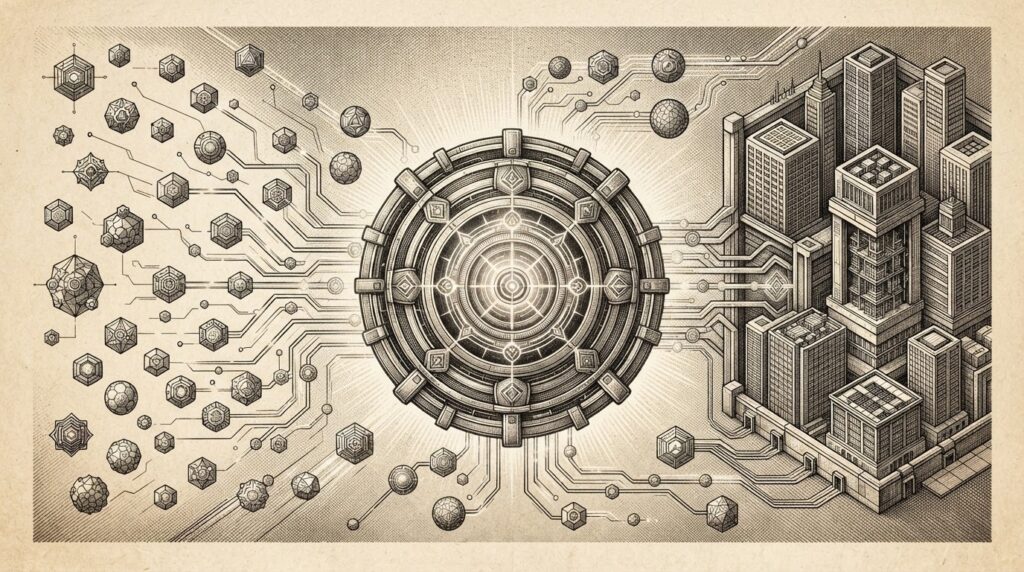
The release of Snowflake Cortex AI Gateway at Black Hat 2026 marks a transition in how enterprises manage autonomous systems. By integrating the technology from its May 2026 acquisition of Natoma, Snowflake is positioning itself not merely as a data warehouse, but as the connective tissue for the agentic stack. This move signals that the Model Context Protocol (MCP) gateway is evolving from a niche security utility into a foundational horizontal infrastructure layer.
The Shift to Agent Interoperability
As Mayank Upadhyay, Snowflake’s Chief Security and Trust Officer, noted: “Enterprise AI is moving from data interoperability to agent interoperability, and security has to be at the center of that shift.” This observation captures the structural pivot currently underway. Organizations are moving beyond simple RAG pipelines toward complex, multi-agent workflows that require granular control over tool execution. The Cortex AI Gateway addresses this by enforcing identity, policy, and audit at the tool-call level, effectively treating the agent as a first-class citizen within the enterprise perimeter.
A 72-Hour Signal
The market is responding to this shift with significant capital allocation. In a 72-hour window at the end of July 2026, the industry saw three major moves in the agent identity space: the launch of Snowflake’s gateway with seven identity partners (1Password, Aembit, Cyera, Linx Security, Okta, SailPoint, and Saviynt), Cyera’s $1 billion acquisition of Oasis, and Okta’s ~$200 million acquisition of Permiso. This concentration of activity suggests that agent identity is no longer an optional feature but a prerequisite for production-grade agent deployment.
The Competitive Landscape
Snowflake’s entry, backed by its $1.33 billion in quarterly product revenue, validates a crowded field of infrastructure providers. Companies like MintMCP, TrueFoundry, Lunar.dev, Diagrid, Kong, Obot, and Arcade are all vying to define the standards for agent orchestration. While these vendors approach the problem from different angles — ranging from API management to specialized agent runtimes — the common denominator is the need for a centralized gateway to manage the sprawl of MCP servers and third-party integrations like Amazon Bedrock, Azure AI Foundry, and LangChain.
Threading the Protocol
The maturation of this category is further evidenced by the friction points emerging in the ecosystem. The recent Runlayer v. Rippling lawsuit in the SDNY represents the first major intellectual property dispute involving MCP, signaling that the protocol is now valuable enough to litigate. Simultaneously, the release of the MCP stateless specification — the largest revision since the protocol’s launch — highlights the industry’s focus on scalability and modularity. These developments are occurring against the backdrop of the NadMesh botnet, which has identified MCP as a primary attack surface, prioritizing it over traditional targets like Kubernetes or Redis. This threat landscape forces a move toward the robust, policy-driven governance that gateways provide.
Implications for the Ecosystem
For builders, the message is clear: infrastructure is moving up the stack. The ability to provide visibility into real-time agent actions and end-to-end audit trails is becoming a competitive advantage. Investors should look for platforms that can bridge the gap between legacy identity providers and the fluid, tool-calling nature of modern agents. For operators, the challenge remains the capacity gap; with 57% of organizations reporting significant deficits in security and risk management, the adoption of managed gateway infrastructure may be the only path to scaling agentic operations safely.
Open Questions
While the infrastructure layer is crystallizing, the long-term winners remain uncertain. Will the market favor integrated platforms like Snowflake, or will specialized, protocol-native gateways gain more traction? Furthermore, as the NadMesh botnet demonstrates by prioritizing MCP exploitation over Kubernetes, Docker API, and Redis, the security of the MCP ecosystem is still in its infancy. The widening gap between gateway capabilities and evolving exploitation techniques will ultimately determine which platforms earn the production trust required for widespread adoption.