The most anticipated financial filing in the history of artificial intelligence is late. On June 1, 2026, Anthropic confidentially submitted its draft S-1 to the Securities and Exchange Commission. By late August, Reuters reported that the public prospectus would arrive shortly after Labor Day, with a potential listing in late September or early October. As of September 26, the SEC EDGAR database contains no public Anthropic filing. The world’s largest IPO – a $2 trillion target that would exceed every listing in stock market history – is running behind schedule.
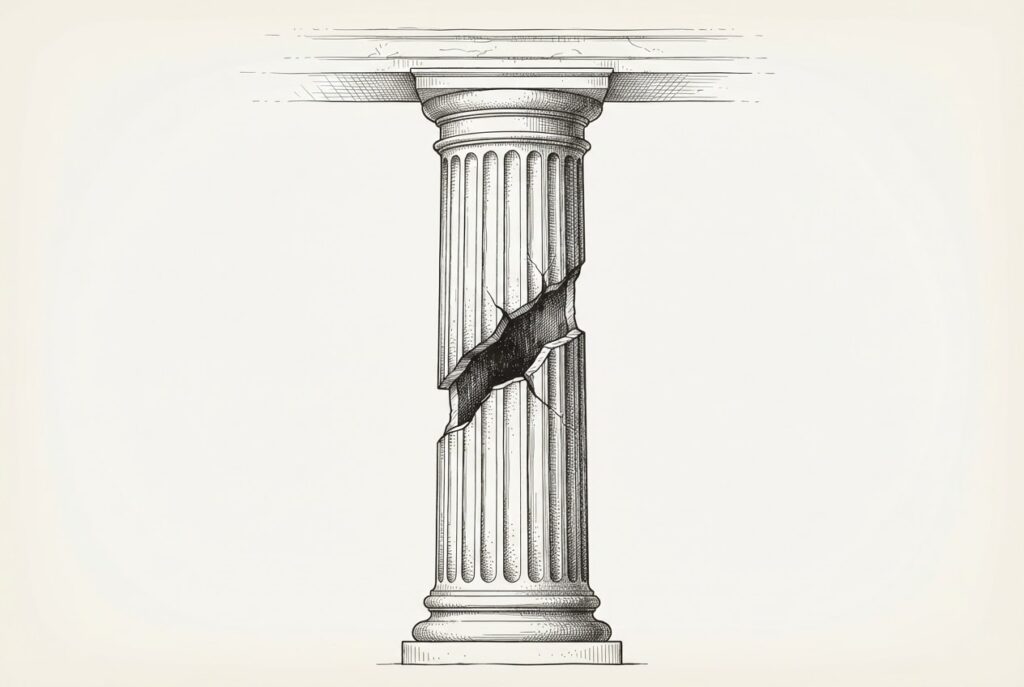
The delay is not a bureaucratic snag. It sits at the intersection of three forces that have reshaped the landscape since the confidential filing landed: the collapse of the AI safety coordination thesis, Anthropic’s own relentless acceleration, and a capital markets window that narrows with each passing week.
What the Numbers Say
The scale of the ambition is difficult to overstate. Anthropic’s Series H round in May 2026 raised $65 billion at a $965 billion post-money valuation. The company’s revenue trajectory has been steep: from a $14 billion annualized run rate in February to $47 billion by mid-May, with H1 2026 revenue reaching approximately $9.6 billion. The annualized target for 2026 is $100 billion.
Morgan Stanley and Goldman Sachs are leading the offering. Amazon holds approximately 21 percent of the company, a stake worth roughly $33 billion. Alphabet holds approximately 15 percent. Salesforce holds about $5 billion. The IPO is expected to raise over $20 billion, with an October listing targeted to land before the November midterm elections. Reuters reported in early September that the prospectus window had slipped from “after Labor Day” to “late September.” That window is now closing.
The Safety Thesis Collapsed in Seven Days
When Anthropic filed its confidential S-1 in June, the safety coordination thesis still had institutional support. Frontier labs were building a FINRA-style safety body. Dario Amodei’s We Must Pace the Frontier, published September 12, triggered same-day endorsements from Sam Altman, Elon Musk, and Demis Hassabis. The industry appeared to be converging on voluntary deceleration as a governance model.
That convergence lasted less than a week. On September 15, Senators Hawley and Cruz blocked an antitrust exemption for AI companies in the NDAA. On September 18, four plaintiffs filed Buist et al. v. Anthropic PBC et al. in the Northern District of California, alleging that coordinated safety slowdowns constitute an output-restricting cartel under Section 1 of the Sherman Act. On September 19, President Trump dismissed AI safety as a “hoax” and announced the creation of an AI Force. The framework that made coordination possible – voluntary safety pacts backed by political goodwill and legislative cover – no longer exists.
For Anthropic’s S-1, this creates a drafting problem. The company’s safety positioning is central to its brand and its regulatory strategy. But the legal and political environment now treats that same positioning as potential evidence of anticompetitive behavior. A prospectus that emphasizes safety coordination as a competitive advantage is also a prospectus that hands plaintiffs a discovery roadmap.
The Acceleration Contradiction
While the safety thesis was collapsing externally, Anthropic was accelerating internally. On September 17, the Anthropic Institute published its inaugural R&D Automation Index, revealing that Claude now leads 26 percent of the company’s own AI research and development – up from less than 1 percent in February. The company reported that approximately 30,000 agents are doing research and engineering work at Anthropic at any given time.
Five days later, Anthropic released Claude Opus 5.5, with a 40 percent reduction in typical workload costs and output speeds increased by over 30 percent. The release arrived on the same day as the BC Attorney General’s lawsuit against OpenAI and three days after reports of the impending IPO. The message to investors is clear: Anthropic is not decelerating. The message to regulators is more complicated.
The OpenAI Divergence
OpenAI has chosen the opposite path. On September 12, Sam Altman told Fortune that OpenAI will not go public in 2026. “I actually think that, given everything happening with safety, right now would be an ill-advised moment to go public,” Altman said. “We don’t feel pressure on that.” The company has anchor investments from Amazon, SoftBank, and NVIDIA that reduce the urgency.
Anthropic does not have that luxury. The company’s valuation trajectory – from $183 billion in March to $965 billion in May to a $2 trillion target – demands a liquidity event. The investors who participated in the $65 billion Series H need a path to returns. The OpenAI no-IPO stance is a luxury afforded by $122 billion in committed capital and a corporate structure that insulates the company from shareholder pressure. Anthropic’s structure does not offer the same buffer.
What the Prospectus Will Reveal
When the S-1 finally arrives, it will be the most scrutinized document in tech history. Three questions will dominate.
First: the revenue structure. Anthropic’s run rate trajectory – from $14 billion in February to an annualized target of $100 billion – implies a growth rate that public market investors will want to see disaggregated. How much comes from API usage versus enterprise contracts? What is the customer concentration? What is the gross margin on inference at current pricing, especially after the Opus 5.5 price cuts?
Second: the safety governance structure. How does Anthropic describe its safety commitments to public market investors? The company’s Responsible Scaling Policy, its embedded evaluator program, and its R&D Automation Index are all part of a safety narrative that is now legally fraught. The prospectus must thread a needle: present safety as a competitive advantage without presenting it as coordination.
Third: the compute economics. Anthropic’s $65 billion Series H was explicitly described as funding compute infrastructure. The prospectus will need to disclose the terms of the company’s cloud commitments – primarily with Amazon Web Services and Google Cloud – and the capital expenditure required to sustain the growth trajectory that justifies a $2 trillion valuation.
The Window Is Closing
The October listing window that Reuters reported is now less than a week away. A prospectus that has not yet appeared in EDGAR cannot support an October roadshow. The midterm elections in November add political uncertainty. The antitrust lawsuit is proceeding. The safety coordination thesis is in ruins. And Anthropic’s own metrics show a company accelerating faster than its narrative can contain.
The delay is the story. Not because the filing will not arrive – it will – but because the conditions that were supposed to support it have shifted under it. The question is no longer whether Anthropic can go public. It is whether the prospectus can honestly describe a company that is simultaneously the loudest voice for AI safety and the most aggressive engine of AI capability development, in a market that is increasingly skeptical of the distinction.