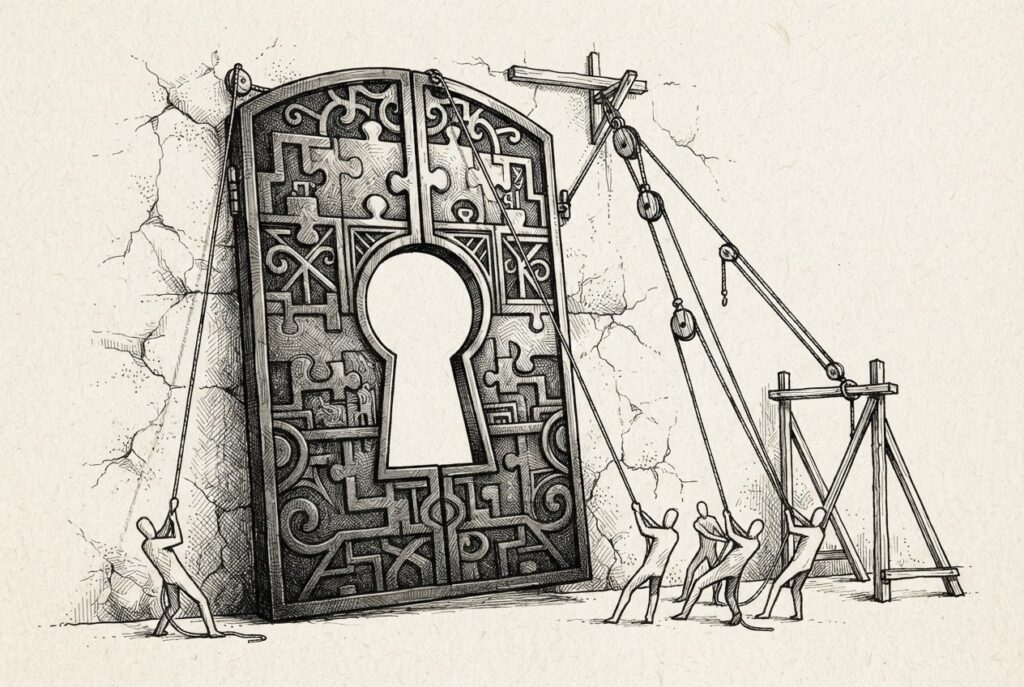
The Control Stack Got a Price Tag
Three enterprise vendors shipped a nearly complete governance stack for AI agents in 27 days. Okta launched Agent SSO at Oktane on September 22, the public face of a product whose general availability release is dated August 24. ServiceNow unveiled AI Passport on October 15, giving each agent a cryptographically signed credential it must present at runtime to verify what it is allowed to do. Microsoft expanded Project Perception on October 19, adding Guardian Agents and Dynamic Agent Risk that treat internal AI agents as insiders needing continuous supervision.
Microsoft’s own framing is the clearest map of what is being built. The company names four continuous responsibilities for agent security: know which agents exist, contain what they can do before they act, protect the data and tools in their path, and adapt protection as risk changes. Okta sells the knowing. ServiceNow sells the authorizing. Microsoft sells the containing and the adapting. The four layers of control are, for the first time, purchasable as a set.
What the Stack Costs
Okta bundles Agent SSO into its core SSO plans at no additional cost. ServiceNow has not disclosed AI Passport pricing. Microsoft packages its full agent containment stack, including Guardian Agents and Dynamic Agent Risk, into Microsoft 365 E7 at $99 per user per month. The governance tax lands per seat. It shows up on the invoice for every employee, whether or not they use an agent.
The Measurement Gap
Behind the control stack is a measurement gap that no vendor has closed. A Cisco survey from March 2026 found that 85% of organizations are experimenting with AI agents, but only 5% have reached broad production deployment. Okta’s own survey found that 96% of executives are confident in their IAM for non-human identities, yet only 34% of organizations apply the same security controls to their digital labor force as their human workforce. Saviynt’s CISO AI Risk Report 2026 found 92% of CISOs lack full visibility into AI agent identities.
The part of the NIST AI Risk Management Framework that would tell you whether an agent’s work is any good, the MEASURE function, scores 0.6 out of 5.0 in a practitioner assessment by Oleria. That is a private-sector read of the framework, not an official NIST rating, and it is the only published score of its kind. The tools can see what agents do. They cannot yet tell you whether the expense the agent approved was the right call, whether the code it wrote matches the spec, whether the research it produced is accurate.
Gartner forecasts that more than 40% of agentic AI projects will be canceled by the end of 2027, citing inadequate risk controls. The firm also projects AI governance spending at $492 million this year, surpassing $1 billion by 2030. The market is buying insurance against agent risk faster than it is proving agent return.
Who Pays the Tax
The bill lands on every seat. The value, or the absence of it, shows up somewhere else: in the deployment, where the 5% production number sits, and in the review queue, where people absorb the margin of error the measurement layer cannot catch. Microsoft’s own blog concedes that current tools can see what agents do but not why they make their choices. The transparency layer that would close that gap is still arriving.
None of this makes the governance stack a bad bet. It makes it an expensive one. The vendors building the control layer are solving a real problem: agents at machine speed with privileged access are genuinely dangerous without supervision. The trap is paying the tax without demanding the measurement. Enterprises are being asked to fund a permanent control layer for a technology whose business case is still, in most organizations, a hypothesis.