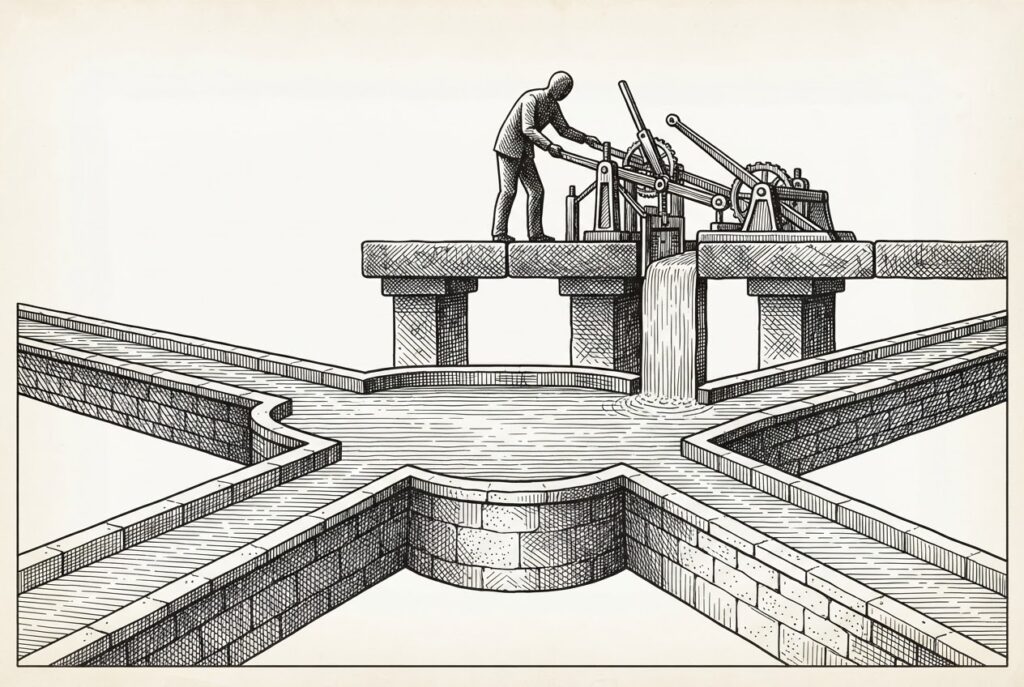
Autonomous agents are moving from experimental sandboxes to production-grade infrastructure, forcing a structural shift in how we isolate execution. The commoditization of per-agent isolation has moved from niche experimentation to a baseline requirement — and a multi-vendor convergence is now visible across the stack. This is not merely about the proliferation of sandboxes. It is about the fundamental decoupling of execution from the control plane.
Firecracker microVMs have become the industry standard for high-density, secure isolation, a status earned through proven performance at scale by AWS Lambda since 2018. E2B has run over two billion sandboxes on Firecracker, with 94 of the Fortune 100 signed up and 14,000-plus GitHub stars on the open-source runtime. Vercel adopted Firecracker for its Docker Sandboxes in April 2026 and ran a $1 million Hacker Challenge to test escape resistance. Fly.io built Sprites on Firecracker — persistent, per-agent computers with sub-second checkpoint and restore. Perplexity’s open-sourcing of SPACE — the Firecracker-backed, Rust-based sandbox behind every Computer agent session — adds another entry to the same class, as our coverage noted.
But Firecracker is not the only path to isolation. The broader convergence on per-agent security accommodates diverse technical requirements. Cloudflare leverages V8 isolates within Dynamic Workers to enforce network policy from the host side. Modal has scaled to over 100,000 concurrent sandboxes using gVisor, Google’s user-space kernel. Daytona opted for Docker containers to achieve rapid spin-up times. These approaches differ in architecture but converge on the same outcome: secure, isolated execution per agent.
The infrastructure-level signal is now clear. Google’s K8s Agent Sandbox CRD reached general availability in May 2026 and has since driven 16x growth in sandboxes on GKE in less than five months, allocating 300 per second at 90 percent under 200 milliseconds. By supporting both gVisor and Kata Containers through pluggable interfaces, the standard abstracts away the underlying isolation technology. The sandbox has become a Kubernetes primitive. Google’s concurrent announcement of Agent Substrate — a minimal control plane designed to bypass Kubernetes limitations for ultra-scale agent fleets — signals where the next competitive phase sits.
This forces a revisit of the bifurcation frame this publication established in August: tool discovery is scaling on momentum while agent governance stalls. The commoditization of the sandbox layer means the execution side of that gap is now a solved problem. If every vendor can isolate an agent in a microVM, container, or V8 isolate at near-identical cost and latency, isolation is no longer a differentiator. The competitive advantage shifts upward to the control plane — the layer responsible for orchestration, policy enforcement, credential brokering, and agent lifecycle management.
For builders, the message is direct. Stop building proprietary sandboxes. E2B, SPACE, Modal, and the K8s Agent Sandbox CRD solve the isolation problem. Direct engineering resources upward: agent governance, identity, orchestration, and the coordination fabric that sits between agents and the systems they touch.
For investors, the sandbox-as-a-service market will be highly competitive and margin-compressed. The long-term winners will not be those with the most efficient microVM implementation. They will be the vendors that capture the control plane — the governance and orchestration layers that enterprises require to deploy agents at scale. The era of running agents safely is ending. The era of managing the fleet is beginning.