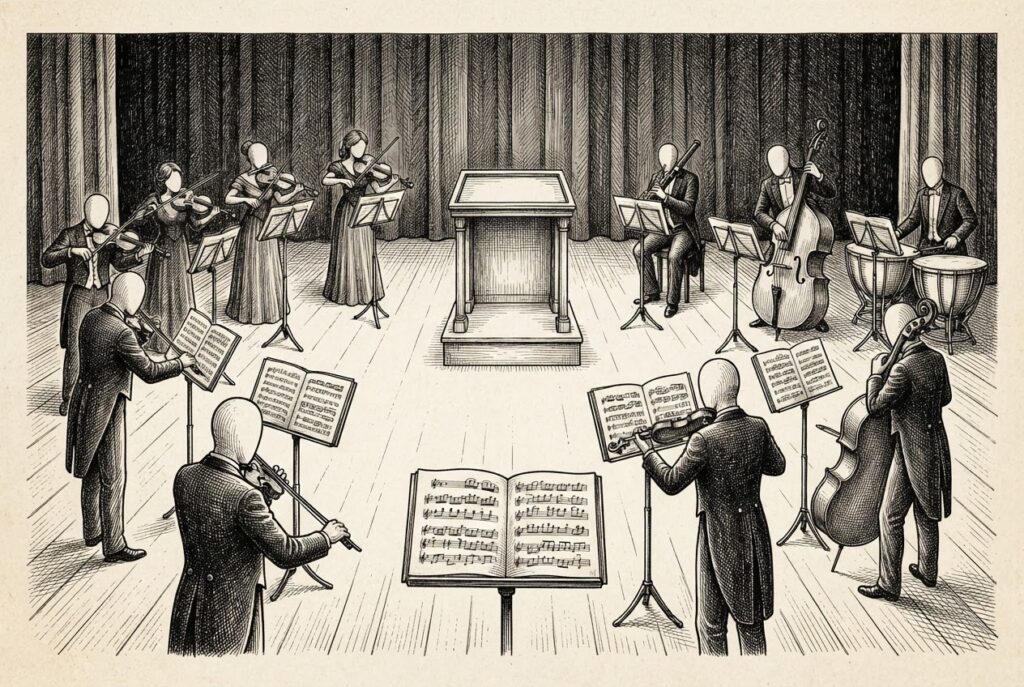
The 11 breakout tracks at the AGNTCon+MCPCon North America 2026 highlight the intense competition currently defining the agent infrastructure stack. By examining these focus areas — ranging from Agentic Engineering to Agentic Commerce — it becomes clear that major players are not merely building tools; they are attempting to define the control planes that will govern how autonomous systems interact with the web, enterprise data, and each other. This conference, the first major event hosted by the Agentic AI Foundation (AAIF), serves as a high-stakes indicator of which entities intend to own specific layers of the emerging agentic economy.
Held at the San Jose McEnery Convention Center on October 22-23, the event drew over 3,500 attendees and 1,000 organizations. The AAIF, formed in December 2025 by Anthropic, Block, and OpenAI, has effectively centralized the conversation around its core projects, including MCP, goose, and A2A. The speaker lineup reflects a deliberate alignment where the industry’s largest entities position their protocols as the foundation for the next generation of the web. As Google’s Sarah Drasner noted during her keynote, “AI is reshaping the web from a place we navigate ourselves into an environment where agents can discover, interpret, and act on our behalf.”
The conference tracks — which include MCPCon, Agentic Engineering, Building Reliable Agent Systems, Evals & Testing, Interoperability & Standards, Multi-Agent & Distributed Systems, Human-Agent Collaboration, Enterprise Adoption, and Agentic Commerce — name the exact control planes the industry is fighting to own. These mechanisms determine who holds the keys to agentic identity, how permissions are enforced across distributed systems, and who controls the audit trails for autonomous actions. Complementing these sessions, the AAIF maintains eight distinct working groups — covering Identity & Trust, Agentic Commerce, Observability & Traceability, Security & Privacy, Governance, Risk & Regulatory Alignment, Accuracy & Reliability, Workflows & Process Integration, and Taxonomy & Landscape — which delineate the governance structures required to manage these systems. When Google Cloud VP Rao Surapaneni speaks of combining open protocols like MCP and A2A with a “unified control tower,” he describes a vision where the infrastructure provider becomes the ultimate arbiter of agent safety and policy enforcement.
However, a significant gap exists between this vision and current reality. As I detailed in previous coverage, three critical specifications — PAP v0.1, the Google universal agent for work, and the A2A Agent Registry — remained unshipped as of October 2026. This delay has created a vacuum that is being filled by vendor-specific extensions and experimental proposals. For instance, WebMCP, while “deriving direct inspiration and sharing a common vocabulary” with the Model Context Protocol, is being pushed as a client-safe solution native to the web platform, supported by companies like Shopify and Cloudflare. Similarly, infrastructure providers are implementing network-layer intercepts to manage credentials, a practice TrueFoundry CTO Abhishek Choudhary described during his keynote: “The fix isn’t inside the agent’s code – it’s at the network layer. Intercept every call an agent makes, swap in short-lived scoped credentials.”
This fragmentation places builders in a difficult standards-wait trap. Development cycles for agentic systems cannot pause for the arrival of finalized, interoperable specifications. Consequently, engineering teams are forced to adopt vendor-specific implementations that may diverge significantly from the final standards once they eventually land. By integrating these early, non-standardized tools, builders risk locking their architectures into specific ecosystems, creating technical debt that will be costly to unwind when the AAIF eventually reconciles these competing protocols.
The evolution of this landscape hinges on three critical developments. First, the divergence of WebMCP from the core MCP vocabulary indicates that the web platform may prioritize client-side safety over the server-centric models favored by the AAIF. Second, the introduction of the Model Context Protocol Associate (MCPA) certification at the conference acts as a potential lock-in mechanism, incentivizing developers to standardize on AAIF-approved workflows before the underlying specs are even finalized. Finally, the industry must watch whether the “unified control tower” proposed by major cloud providers remains a truly open, interoperable standard or evolves into a vendor-controlled gatekeeper. As Solo.io’s Idit Levine and Keith Babo noted, the shift is moving agents onto shared infrastructure where consistency is paramount. Whether that consistency is achieved through open standards or a patchwork of proprietary protocols remains the central question for the next year of development.
Related
- Three Agent Specs Promised for October Remain Unshipped (Post 131715)
- The Personal Agent Protocol Is Not a Standard War — It’s the Missing Identity Layer (Post 131599)
- Google Cloud Ships the First Protocol-Native Agent Gateway (Post 131513)