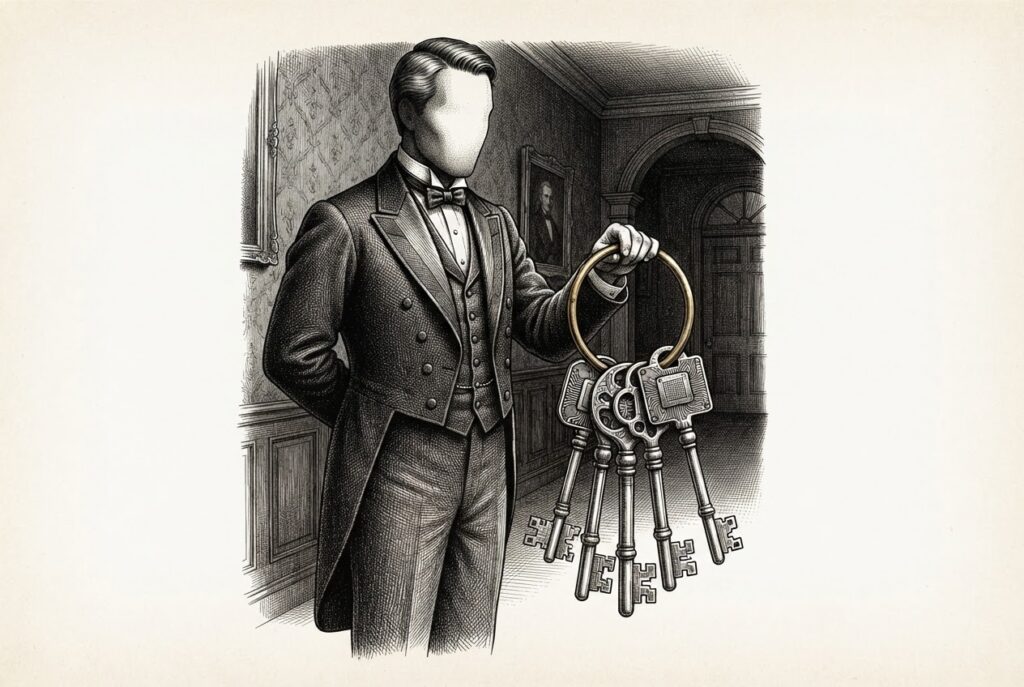
In the digital age, we aren’t just handing over the keys to the front door. We are handing over the keys to our entire lives. As AI agents move from novelty to necessity, the question isn’t just what they can do, but how much of our identity they need to hold to do it.
The Identity Layer
The industry has finally realized that an agent without credentials is just a chatbot with a dream. Enter the 1Password for Agents trust layer, announced in October 2026. CPO Aashish Tripathi calls it the “trust layer that makes this possible,” allowing for credential injection without exposing the actual model to your passwords. It’s a clever bit of plumbing. Pair that with Stripe Link, which provides agent wallets with one-time-use cards for assistants like Meta’s Muse, and you have the makings of a functional digital butler. You aren’t giving the agent your credit card; you’re giving them a temporary, single-use token. It’s the digital equivalent of giving the butler a twenty-dollar bill for groceries rather than your entire checkbook.
The Butler Metaphor
This is where the butler metaphor gets interesting. A traditional hardware lock, like the one discussed in Apple’s capability timeline, focuses on the Secure Enclave – the physical vault. It’s about keeping the house secure. But a butler is about agency. They don’t just guard the house; they act on your behalf. The current shift toward agent-specific identity layers is an attempt to give these digital butlers enough authority to be useful, without giving them the power to burn the house down.
Competitive Landscape
The approaches vary wildly. SpaceX’s GrokBot, framed as an “AI teammate,” operates on a persistent cloud computer model. Meanwhile, Meta’s Muse positions itself as a “personal assistant” tucked inside a Secure VM, with Meta claiming the model itself never actually sees your passwords. It’s a fascinating contrast to Apple’s hardware-first philosophy. While Apple wants to lock the door and keep the key in a physical vault, the agent-first crowd is trying to teach the butler how to use a key without ever letting them own it. Meta has even doubled down with Muse Glimmer, an open-weight 30B model optimized for local agents that can run right on your own hardware.
The Merchant Gap
There is a glaring hole in this butler-led future: the merchants. Right now, there is no widely adopted way for a website to distinguish between a legitimate buying agent and a malicious scraper. We are building sophisticated identity layers for our agents, but the stores they visit are still treating them like anonymous traffic. Until merchants can verify that an agent is a buyer and not a bot scraping their inventory, the butler is going to have a hard time getting through the front door.
Closing
We are essentially in the training phase of a new class of domestic staff. We want them to be helpful, but we are rightfully terrified of what happens if they get too much autonomy. Whether it’s through one-time-use cards or secure credential injection, we are trying to build a leash that is long enough to be useful but short enough to keep us in control.