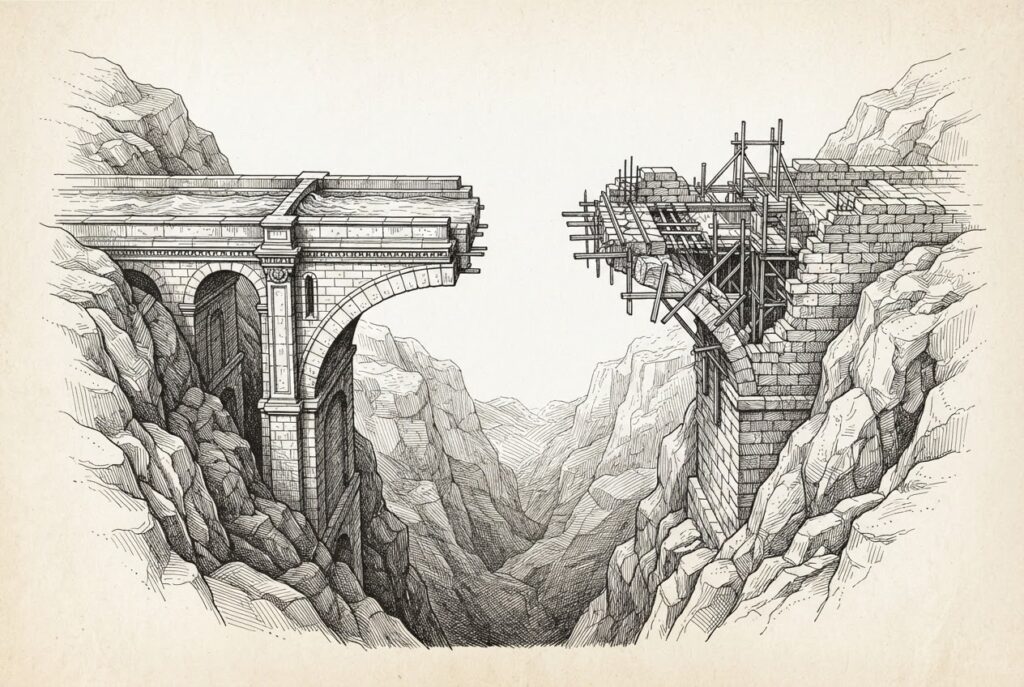
The simultaneous arrival of Huawei Cloud’s AI Cluster Service (AICS) and Google’s Managed Agent Harness this week reveals a deepening structural divide in how autonomous systems are being built. While both platforms aim to standardize enterprise agent deployment, they are emerging from fundamentally different architectural philosophies. Huawei’s announcement at HUAWEI CONNECT 2026 in Shanghai marks the first major China-side managed agent platform, signaling that the agent governance framework is no longer a monolithic Western construct.
At the heart of the AICS offering is a verticalized, silicon-to-agent architecture. Unlike platforms that rely on heterogeneous hardware, Huawei has optimized its stack around the Ascend chip ecosystem. This integration is designed to support the Agentic Infra paradigm, which prioritizes unified scheduling for general and AI workloads alongside secure autonomy. A defining feature of this infrastructure is the Context Memory Storage (CMS). By providing petabyte-scale memory — double the current industry capacity — and delivering terabyte-scale reads at 50% higher performance, Huawei is addressing the primary bottleneck for complex, long-running agent workflows: the latency and capacity of agentic memory.
The platform operates across two primary tiers. The Agentic MaaS (Model-as-a-Service) platform allows developers to invoke state-of-the-art models with a single click, bypassing the need for manual deployment. Complementing this is AgentArts, an enterprise-grade environment already utilized by over 100 organizations, including the Shenzhen Longgang District Government, China Southern Power Grid, Guangzhou Laboratory, and Kingsoft Office. With over 3,500 agentic infrastructure customers and 1,000 deployed projects, Huawei is moving beyond experimental pilots into production-grade industrial AI, spanning sectors from smart healthcare to embodied AI and smart government.
The emergence of AICS fundamentally alters the global governance landscape. By establishing a high-performance, China-first managed platform, the industry now possesses a significant non-Western node within the broader governance framework. This complicates ongoing efforts to standardize protocols like the Model Context Protocol (MCP). As governance shifts toward the protocol layer, the existence of a distinct, high-performance stack in China suggests that the future of agent interoperability will be defined by how these disparate regional infrastructures negotiate runtime authority and data sovereignty.
The rollout strategy further underscores this geopolitical reality. AICS becomes available in China on September 30, 2026, while availability for the United States and the rest of the world is staggered through November and December. This phased approach reflects a bifurcated technology landscape where infrastructure providers are increasingly building self-sufficient stacks to insulate themselves from global supply chain volatility. Huawei’s official HUAWEI CONNECT 2026 news release frames this as the creation of an “Agentic Cloud for the Agentic World,” a vision that emphasizes domestic self-reliance.
For the market, the Huawei launch confirms that the agent infrastructure war is not merely about model performance, but about the underlying architectural constraints. The ability to provide petabyte-scale memory and unified scheduling is what will ultimately determine which platforms can support the next generation of autonomous enterprise agents. Whether this vision remains a parallel track or eventually finds common ground with Western standards remains the central question for the coming year. For now, the emergence of a fully realized, China-side managed agent platform confirms that the infrastructure layer is becoming as fragmented and competitive as the model layer itself.