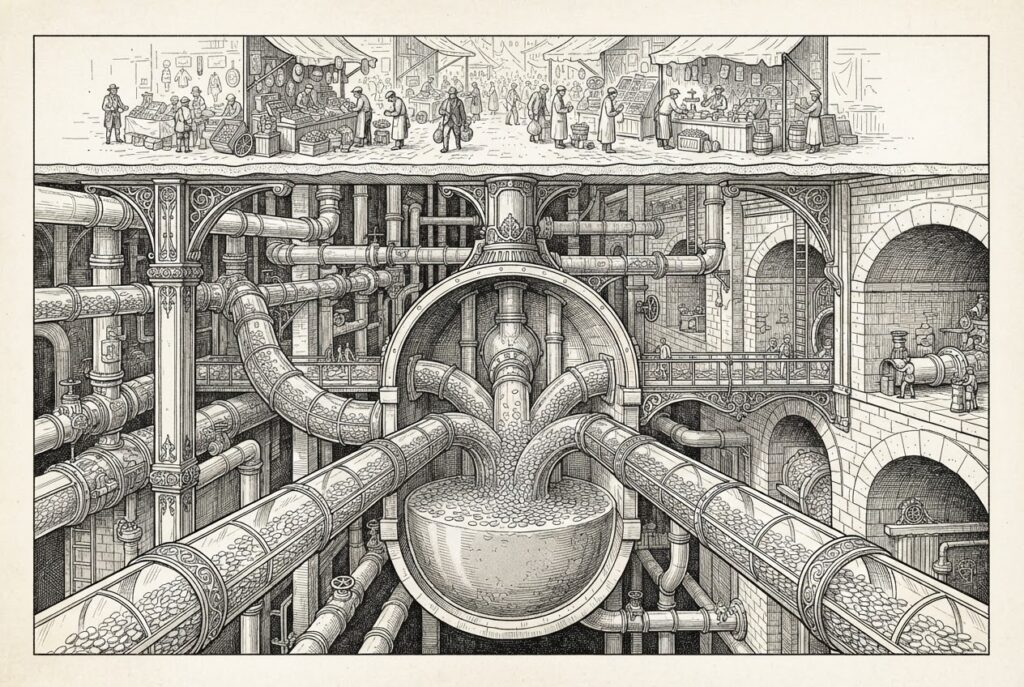
Digital asset revenue is often treated as a derivative of token volatility. OSL Group’s H1 2026 results suggest a different reality. With total revenue reaching HK$55.813B—a 65.8% year-over-year increase—the firm is demonstrating that the most reliable margins are found in the plumbing, not the speculative churn.
The shift is structural. Payments now account for 88% of OSL’s revenue, totaling HK$49.083B. This is not a temporary spike; it is the result of a distribution-first model that treats stablecoins as the base layer for global B2B commerce. CEO Kevin Cui describes the strategy as a move away from short-term speculation, noting that the business is built to deliver next-generation stablecoin financial infrastructure that can endure through market cycles. The data supports this: total transaction volume surged 241.3% to HK$172.0B.
The growth of USDGO provides the clearest evidence that this model works. Launched in February 2026 with $50M, the stablecoin reached $1.2B by August. This 24x growth trajectory has pushed USDGO into the top six regulated stablecoins globally. By integrating USDGO into a broader payment stack, OSL has captured significant demand for reliable, regulated settlement assets.
The launch of AgentPay on August 7, 2026, represents the next phase of this evolution. The stack is now split into two distinct layers: a protocol layer that handles routing across USDT, USDC, USDGO, x402, AP2, and MPP, and a settlement layer that ensures transaction finality. By positioning itself as the infrastructure provider for AI agents, OSL is betting that the future of commerce will be machine-to-machine, requiring a high-throughput, multi-stablecoin environment that traditional banking rails cannot provide.
Regulatory positioning serves as the firm’s primary moat. The acquisition of Banxa in January 2026 added over 40 trading and payment licenses to the firm’s portfolio. More importantly, OSL has navigated the tightening global framework with precision. Securing a MiCAR license from the Austrian FMA in July 2026 is a significant differentiator, particularly given that only about 17% of firms have successfully converted to full CASP authorization. When combined with their Australian AFSL from ASIC and the looming compliance deadlines of the GENIUS Act—January 2027 for issuers and July 2028 for service providers—OSL is constructing a compliance fortress that few competitors can replicate.
The risks are as structural as the rewards. The B2B stablecoin payment market is expanding rapidly, with McKinsey and Artemis reporting a 733% year-over-year growth to approximately $226B. This growth attracts both legacy financial institutions and well-funded startups. While OSL holds a Frost & Sullivan certification as the world’s largest B2B stablecoin payment infrastructure company by transaction volume, maintaining that lead requires constant technical iteration. The complexity of routing across diverse protocols like x402 and AP2 introduces operational overhead that could, if mismanaged, erode the margins that currently support their HK$331M in adjusted non-IFRS income.
OSL’s transition from a trading-centric firm to an infrastructure powerhouse is a bet on the commoditization of stablecoin payments. They are no longer just participating in the market; they are providing the rails upon which it runs. For institutional investors, the message is that the infrastructure layer is where long-term value is being captured, and OSL is currently holding the keys to the engine room.