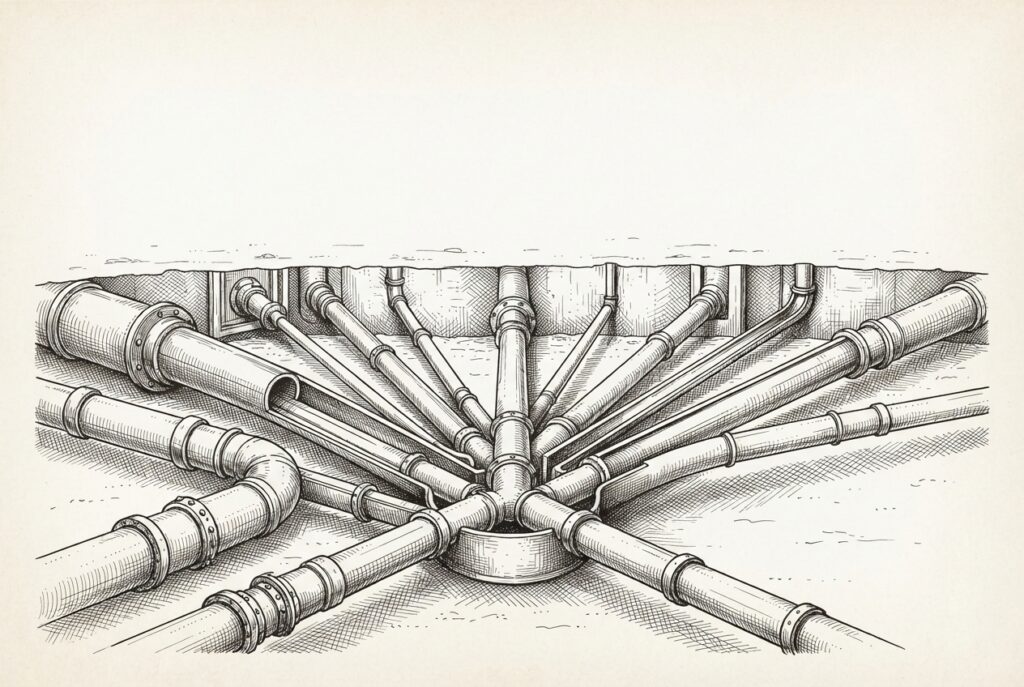
LayerZero unveiled ATLAS—Aggregated Trading Liquidity and Settlement—on August 25, 2026, aiming to consolidate the fragmented plumbing of global finance into a single, high-performance architecture. The system leverages the Zero blockchain, a Layer-1 network capable of exceeding two million transactions per second with sub-millisecond latency. ATLAS is not a trading venue itself; it is a “headless exchange,” a modular infrastructure layer designed for third parties to build and operate their own markets atop a unified settlement engine.
The “headless” designation is the core mechanism. By decoupling the exchange engine from the user-facing interface, LayerZero positions itself as the underlying utility for onchain capital markets. CBO Simon Baksys described a dual-configuration model in a recent interview: Open ATLAS caters to the permissionless requirements of crypto and prediction markets, while Institutional/Regulated ATLAS embeds KYC, AML, and fairness obligations directly into the protocol. It is a pragmatic attempt to bridge the wilder shores of decentralized finance with the rigid compliance frameworks required by traditional financial firms, potentially utilizing stablecoins or tokenized deposits for settlement.
Institutional interest is tangible, though the level of commitment varies significantly. Citadel Securities, having made a $55 million investment in the ZRO token, is actively collaborating on market structure expertise to evaluate how trading, clearing, and settlement workflows might function on the Zero stack. The DTCC and ICE require a more nuanced reading. Both entities are currently exploring the Zero blockchain—the DTCC for its Tokenization Service and Collateral App Chain, and ICE for potential trading and clearing infrastructure—but neither has committed to a full-scale deployment. In institutional finance, the distance between an evaluation and a production-ready integration is often measured in years.
This infrastructure race is becoming increasingly crowded as the market for tokenized assets begins to see real-world testing. Coinbase launched 13 tokenized U.S. equities on the Base blockchain on August 24, and the Robinhood Chain went live in July. These platforms are not necessarily competing for the same users, but they are all vying to define the standards for how tokenized real-world assets will move, settle, and be collateralized.
LayerZero’s approach to value capture is deliberate. The ZRO tokenomics are designed to mimic traditional exchange economics: venues can stake ZRO for higher fee rebates, and 75% of fees—after accounting for those rebates and payments to market creators—are directed toward a buy-and-burn mechanism. It is a protocol-level attempt to align the incentives of the infrastructure provider with the volume generated by the venues built on top of it, moving beyond the speculative token models of the past.
The industry faces a looming choice between unified standards and a proliferation of siloed chains. As the DTCC prepares for the full commercial launch of its Tokenization Service in October 2026—with a roster of participants including BlackRock, JPMorgan, and Goldman Sachs—the pressure to integrate is mounting. While LayerZero has secured Google Cloud as a technology partner and ARK Invest as a shareholder, the success of ATLAS will depend on whether it can attract enough liquidity to become a standard, rather than just another isolated venue.
The timing of the ATLAS announcement, which saw the ZRO token surge between 19% and 30%, reflects the market’s appetite for infrastructure that promises massive throughput. The real test will occur later this fall when ATLAS is expected to launch. For now, the industry is watching to see if the “headless” model can successfully integrate with the existing, deeply entrenched systems of the DTCC and the global exchanges.
The mechanism is in place, but the ultimate hurdle is trust. Institutions are notoriously cautious about migrating the core of their business to new stacks. Whether ATLAS can provide the necessary reliability to satisfy these gatekeepers will determine if this is a genuine shift in market structure or merely a sophisticated technical experiment.