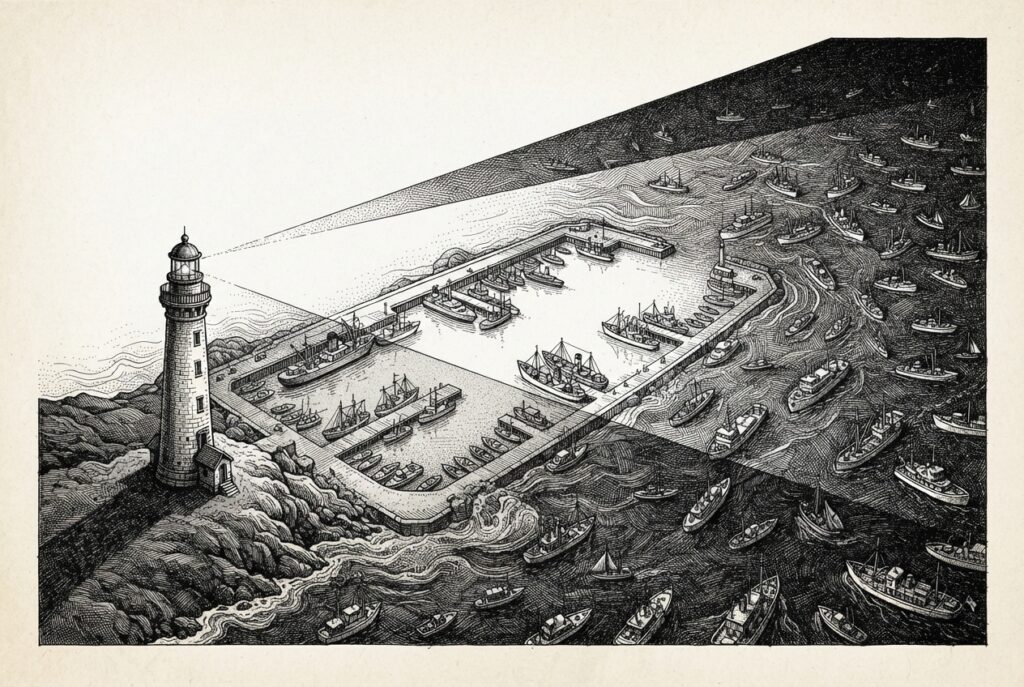
On August 14, 2026, Cloudflare introduced new capabilities within its Cloudflare One platform to integrate the Model Context Protocol (MCP) into enterprise network security frameworks. The core of this update is a beta-stage Gateway selector, experimental.is_mcp == true, which functions as a network-layer detection primitive for governing agentic traffic. As detailed in the official announcement, this mechanism utilizes protocol-level heuristics on TLS-inspected traffic to identify MCP requests by inspecting specific headers—MCP-Protocol-Version, Mcp-Method, and Mcp-Name—alongside JSON-RPC method patterns. This implementation shifts the enterprise focus from the abstract security properties of MCP toward the practical requirement of governing its adoption at the network layer.
The urgency behind this capability is rooted in the emergence of Shadow MCP. Similar to the Shadow IT and Shadow AI phenomena, Shadow MCP refers to unapproved or unsupervised deployments of MCP instances operating outside formal security governance. According to the OWASP MCP Top 10, specifically the MCP09:2025 category, these instances often appear when employees discover servers in repositories or product guides and connect them directly to their MCP clients without oversight. Unlike previous attempts to secure agentic traffic through unreliable URL-based filtering, which often failed to account for the dynamic nature of agent connections, this protocol-level approach provides a deterministic method for identification.
The risks associated with this unmanaged connectivity are documented in empirical research. At DEF CON 34, researcher David Fiser presented The Hidden Cost of Agentic Connectivity, an analysis of over 19,000 MCP servers. The findings indicated that 82% of the analyzed servers exhibited path traversal exposure, 34% were vulnerable to command injection, and only 8.5% utilized OAuth. In many cases, existing security features were found to be trivially bypassable, highlighting the necessity for centralized oversight.
The ability to detect this traffic at the network layer has been bolstered by the MCP 2026-07-28 specification. By shifting to a stateless, per-request model and removing the initial handshake, the protocol now places versioning and operation details directly on every request. This architectural change makes the protocol identifiable on the wire, allowing security infrastructure to inspect and classify traffic in real-time rather than relying on session-based state tracking that could be easily circumvented.
Cloudflare’s approach to managing this landscape follows a structured, three-part governance model: visibility, approval, and enforcement. The first step is discovery. A dedicated dashboard provides organizations with a comprehensive breakdown of MCP activity, including total request volume, unique users, and unique servers over a configurable time window. It tracks MCP servers over time with per-server request counts and provides a traffic breakdown by on-ramp, separating MCP Portal traffic from direct device client connections. Crucially, it highlights top MCP servers seen outside of approved portals—the primary indicator of Shadow MCP—and identifies top users by request volume.
Once visibility is established, the objective is to move approved servers behind managed portals. This ensures that connections are subject to the organization’s access policies, curated tool catalogs, and data loss prevention (DLP) measures. Furthermore, organizations can implement WriteGuard, an internal MCP server-side control pattern. WriteGuard assigns risk tiers to individual tools and manages their enabled or disabled states, allowing the system to pass read operations unchanged, add agent attribution and audit events to allowed writes, or block critical actions before the handler executes.
Finally, the organization can enforce the boundary. By implementing policies such as experimental.is_mcp == true and not traffic.onramp in (‘mcp_portal’), enterprises can automatically block any MCP traffic that attempts to bypass these established, secure paths. This addresses the problem of portal bypass, where an employee might start with an approved server but subsequently connect to an upstream URL directly, thereby skipping the audit trail and security controls. As the authors of the Cloudflare blog post, AJ Gerstenhaber and Kenny Johnson, observed: “An engineer who sees an unexpected result will usually stop and reconsider their actions. Any human being can only click, type, and review so much in a single day. The introduction of AI agents changes both thresholds.”
To manage this effectively, the authors emphasize a clear operational philosophy: “Start with visibility, then close the paths that should not exist.” By treating MCP traffic as a distinct protocol within the network stack, organizations are beginning to apply the same rigor to agentic connectivity that is applied to traditional web traffic. The transition from experimental detection to policy-driven governance represents a technical maturation of agentic infrastructure, moving beyond the initial excitement of deployment toward sustainable, secure integration.