On September 15 and 16, a group of lawmakers and political figures gathered on Capitol Hill for the Pro-Human Assembly. Senator Bernie Sanders (I-VT), Representative Lori Trahan (D-MA), Representative Chip Roy (R-TX), and Steve Bannon appeared on the same stage. The event came four days after President Trump dismissed AI safety concerns as a hoax across seven Truth Social posts and announced the formation of an executive AI Force and a new AI Czar (Post 130477). What is forming is not a single bill or a single argument. It is a legislative counterweight built from incompatible parts – and the policy calendar is giving it almost no room to maneuver.
The proposals already on the table are distinct enough that agreement on the word liability masks fundamental disagreement on the mechanism. Senator Sanders announced the Ban Artificial Superintelligence Act on September 3, co-sponsored with Representative Greg Casar (D-TX). The bill proposes a permanent ban on the development or deployment of artificial superintelligence, a pause on all frontier AI development until a new federal regulatory body is operational, the creation of a cabinet-level agency with authority to oversee and destroy dangerous systems, pursuit of an international treaty, and enforcement penalties that include a corporate death penalty for entities and up to 20 years in prison for individuals. On CNN on September 15, Sanders called Trump a “narcissist” for downplaying AI concerns and urged him to negotiate a treaty with Xi Jinping to pause advanced development. The bill has not yet been formally introduced in Congress.
Trahan’s approach is architecturally different. The FRONTIER Act (H.R. 9925), introduced July 23, 2026 with Representative Jay Obernolte (R-CA) and five other bipartisan co-sponsors, builds a tiered, risk-based framework anchored to a compute threshold of more than 1026 operations. Under this framework, small frontier developers face a transparency baseline – model cards and incident reporting. Large developers must publish a catastrophic-risk framework covering cybersecurity, incident response, and deployment decisions. Very large developers must additionally retain licensed independent verification organizations for ongoing audits. Enforcement falls to a new Commerce Under Secretary, with steep per-day penalties. The bill preempts states from imposing new substantive obligations on covered developers, a provision that explicitly aims to prevent a 50-state patchwork. On X, Trahan framed the push plainly: “It’s past time for Congress to get off the sidelines and do its job. We can start with my bipartisan FRONTIER Act.”
The third mechanism – product liability – has been circulating on the Senate side since September 2025. The AI LEAD Act (S.2937), sponsored by Senators Josh Hawley (R-MO) and Dick Durbin (D-IL), would classify AI systems as products under federal law, creating a federal cause of action for any individual or attorney general to bring product-liability claims when an AI system causes harm. Critically, it forecloses Section 230 platform immunity as a defense and applies to both developers and deployers. The Lieu-Moran bill (House) adds another layer: a mandatory kill-switch requirement, authorizing the Secretary of Homeland Security to order a slowdown or shutdown when a system poses potential catastrophic harm.
What held these together at the Capitol Hill gathering was not a unified legislative vehicle but a shared conviction that liability should not be optional. Steve Bannon accused tech CEOs of attempting a liability shift to the American public. Representative Roy pushed back on Trump’s claim that only the president should decide AI policy, arguing that the country needs broader oversight. The framing – pro-human – is doing real political work here: it reframes the debate from innovation-versus-safety to corporate-accountability-versus-the-public. That framing lets a Vermont progressive, a Texas conservative, and a populist organizer agree on the destination while disagreeing entirely on the route.
Against this, the executive branch’s position is clear. Trump’s September 19 Truth Social posts stated that his administration would not “hinder or stifle the Growth of this incredible Industry” and suggested renaming AI to Superior Intelligence or Extreme Intelligence. No appointee for the new AI Czar has been named. No implementation details for the AI Force have been provided. The legislative coalition is forming precisely because the executive branch has told the market that oversight is someone else’s problem.
The policy calendar is compressing fast. The FTC’s personalized-pricing comment docket (FTC-2026-1057) closes this Thursday. Connecticut’s AI Responsibility Act enforcement and Maryland’s algorithmic-pricing law both take effect October 1. The EU’s Article 50 enforcement has been active since August 2, with zero enforcement actions and no specific agent-guidance published – a silence that tells its own story about regulatory capacity (Post 128846). For firms deploying agents that make real purchasing, booking, or communication decisions, the window for the federal government to establish a coherent liability framework is narrowing by the week.
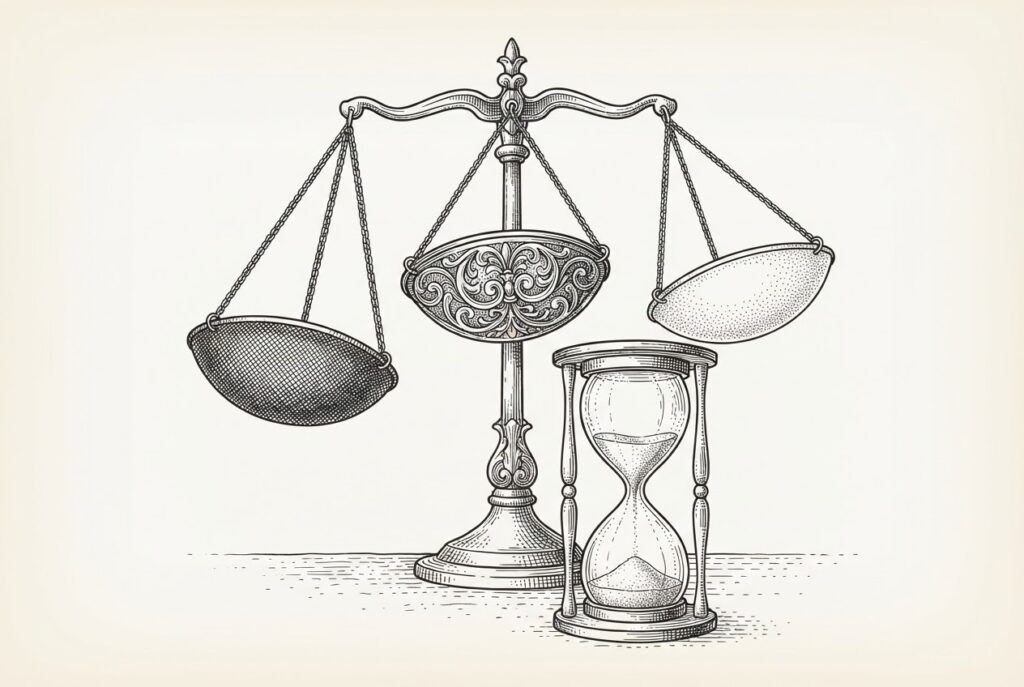
The structural question is whether these mechanisms can be reconciled before the window closes. As we mapped in our policy landscape analysis (Post 129813), a ban with criminal penalties (Sanders), a tiered audit framework with state preemption (Trahan-Obernolte), and federal product liability with Section 230 foreclosure (Hawley-Durbin) do not easily coexist. They share a destination – accountability for AI systems that cause harm – but they charter different ships to get there. If the coalition cannot converge on a single approach, the most likely outcome is that the executive branch’s position becomes the default: growth-first, liability later, if ever. The coming weeks will test whether a coalition this broad can produce a law this specific.