Anthropic’s decision to abandon its roughly $6 billion acquisition of Decart in early September serves as a clear indicator of the current climate in the artificial intelligence sector. Rather than a simple failed negotiation, the move highlights a strategic pivot: frontier labs are prioritizing operational simplicity over rapid capability expansion as they prepare for public market entry. This shift underscores a broader divergence in how these organizations intend to sustain their operations as they transition from private research entities to public utilities.
OpenAI: The Infrastructure Moat
OpenAI is framing its path to the public markets around the premise that compute infrastructure is the only durable asset in the AI value chain. This strategy is evident in the company’s confidential S-1 filing with Goldman Sachs and Morgan Stanley, which followed a $852 billion post-money valuation as of March 31, 2026. By committing to the $105 billion Nvidia-OpenAI Ohio facility – a project featuring 4.25 GW of power and a 20-year lease – the company is building a long-term hedge against chip market volatility. While CFO Sarah Friar has emphasized to CNBC that adopting public company hygiene is a priority, the company has signaled a timeline shift toward 2027. This adjustment suggests that the sheer scale of their infrastructure build-out requires a more deliberate pace than a standard technology IPO.
Anthropic: Engineering the Clean Balance Sheet
Anthropic is pursuing a strategy focused on financial architecture to satisfy the rigorous scrutiny of public markets. The company is targeting an October 2026 IPO at a roughly $965 billion post-money valuation, supported by a $65 billion Series H round. While some investors have discussed a potential $2 trillion valuation per the Financial Times, the company’s primary objective is to present a streamlined financial profile. The collapse of the Decart deal reflects a refusal to introduce M&A complexity into their S-1 filing, which was filed confidentially on June 1, 2026. This approach is bolstered by a $71 billion off-balance-sheet debt structure managed through Apollo and Blackstone, alongside the resolution of a $1.5 billion copyright settlement – the largest in U.S. history. By isolating liabilities and focusing on a scalable balance sheet, Anthropic is attempting to minimize friction for institutional investors.
DeepSeek and Moonshot: The Sovereign Anchor
In contrast to their U.S. counterparts, Chinese frontier firms like DeepSeek and Moonshot AI are tethering their futures to domestic sovereign capital ecosystems. DeepSeek is targeting a Shanghai STAR Market debut in 2027 with a $74 billion valuation, backed by investors including Tencent, CATL, and NetEase. Similarly, Moonshot AI has filed a confidential A1 with the HKEX, targeting a $50 billion valuation. These firms are positioning themselves as essential components of national industrial policy. Their revenue models – such as Moonshot’s $300 million ARR from Kimi K3 – are optimized for a market that prioritizes domestic integration over the global consumer-facing strategies favored by U.S. labs.
The Financial Story of the Pricing War
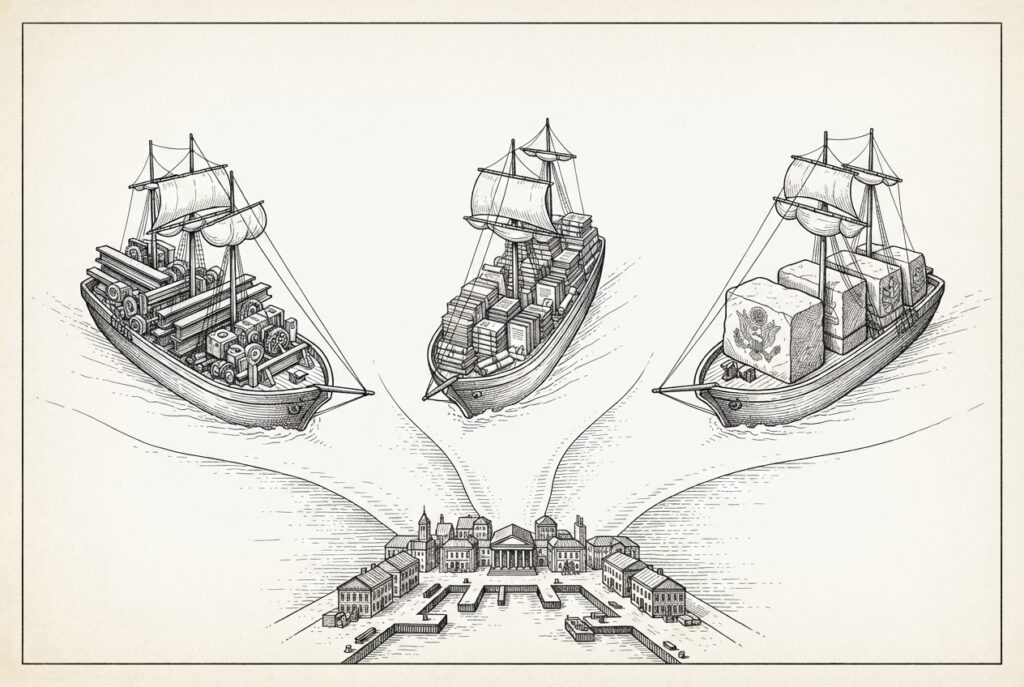
The ongoing AI pricing war is fundamentally a tool for financial storytelling. As the commodity tier of AI models commoditizes, labs must prove that their gated, high-end capabilities can command a premium. This is the narrative each lab must sell to the public markets: OpenAI sells the security of infrastructure, Anthropic sells the efficiency of financial engineering, and the Chinese labs sell the stability of sovereign alignment. With the EU AI Act now in full effect, the cost of compliance has become a baseline tax on all these strategies. The IPO wave is not a singular event; it is a divergence in how these companies believe they can best absorb the risks of the next decade.