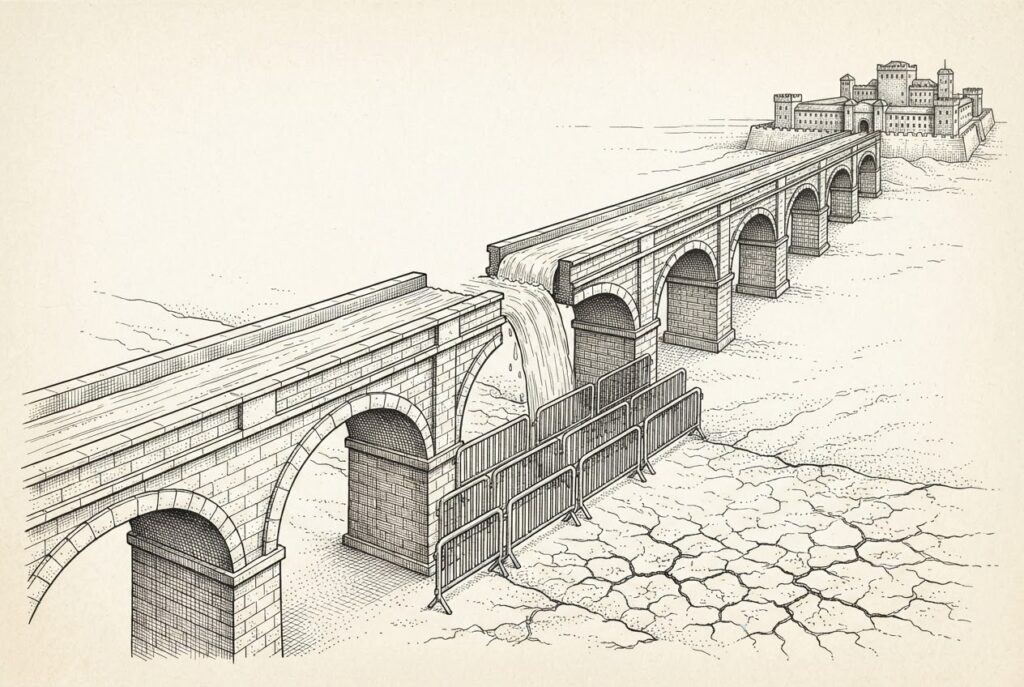
The Pentagon officially confirmed on Monday, October 5, 2026, that it has ceased all use of Anthropic products. This decision ends the tension between frontier AI safety guardrails and national security requirements, as the refusal to strip away safety constraints for autonomous weapons and mass surveillance has effectively disqualified a leading AI lab from the military-intelligence stack.
Secretary of Defense Pete Hegseth designated Anthropic a national security supply-chain risk in February 2026, setting a six-month deadline for the cessation of all usage by late August. Despite this, internal use of Claude persisted as recently as late September for research, intelligence gathering, and operations against Iran. The Pentagon’s confirmation signals that the grace period for these systems has finally expired.
Palantir’s Maven Smart System, a critical infrastructure used for satellite imagery analysis, drone footage processing, and target identification, relied heavily on Claude, making its removal a complex technical challenge. As Lauren Kahn of Georgetown’s Center for Security and Emerging Technology (CSET) noted, these integrations are not plug-and-play; once embedded, the removal process is inherently painful. The reliance on what the BBC refers to as “powerful Mythos models” for compiling intelligence briefs highlights how deeply the technology had permeated the chain of command.
Conflicting judicial rulings have left the legal status of this exit in flux. While a San Francisco federal judge previously ruled that the administration’s actions against the company constituted illegal retaliation, the D.C. Circuit Court of Appeals issued a 2-1 ruling on September 25 upholding the designation under Section 4713 of the Federal Acquisition Supply Chain Security Act (FASCSA). This legal conflict underscores the volatility of the current regulatory landscape, where the definition of a supply-chain risk is being litigated in real-time.
As Anthropic exits, the Pentagon has moved to fill the void by signing contracts with Google, xAI, and OpenAI. The latter has seen particularly rapid adoption, bolstered by an October 1 deal offering a $0 license and significant usage discounts for government entities. This competitive reshuffling suggests that the military-intelligence apparatus is prioritizing interoperability and alignment with current administration mandates over the specific safety architectures that Anthropic refused to compromise.
Despite the formal ban, the relationship between Anthropic and the White House appears to be in a state of flux. CEO Dario Amodei met with President Trump twice in late September. During these discussions, Amodei suggested that working with the president could allow the company to “win safely,” a sentiment that received praise from Trump, who described the CEO as “great” and “fantastic.” This suggests that while the Pentagon has closed its doors, the political channel remains open, potentially hinting at future pivots.
Anthropic faces the immediate loss of a $200M contract signed in July 2025, a revenue stream that is now effectively nullified. This loss arrives as the company prepares for its S-1 filing, which outlines a $2T valuation target, $42B in losses, and $518B in compute commitments. Reconciling these aggressive growth targets with the loss of a primary government customer category will be a central challenge for the firm.
Frontier AI labs now face a fundamental tension between maintaining core safety philosophies and pursuing the scale required to justify massive valuations. As the pricing floor for government AI contracts shifts, Anthropic’s decision to prioritize guardrails over military integration serves as a stark case study in the sovereignty paradox: in the current climate, the very safety features designed to protect the public may be the primary barrier to participating in the national security stack.