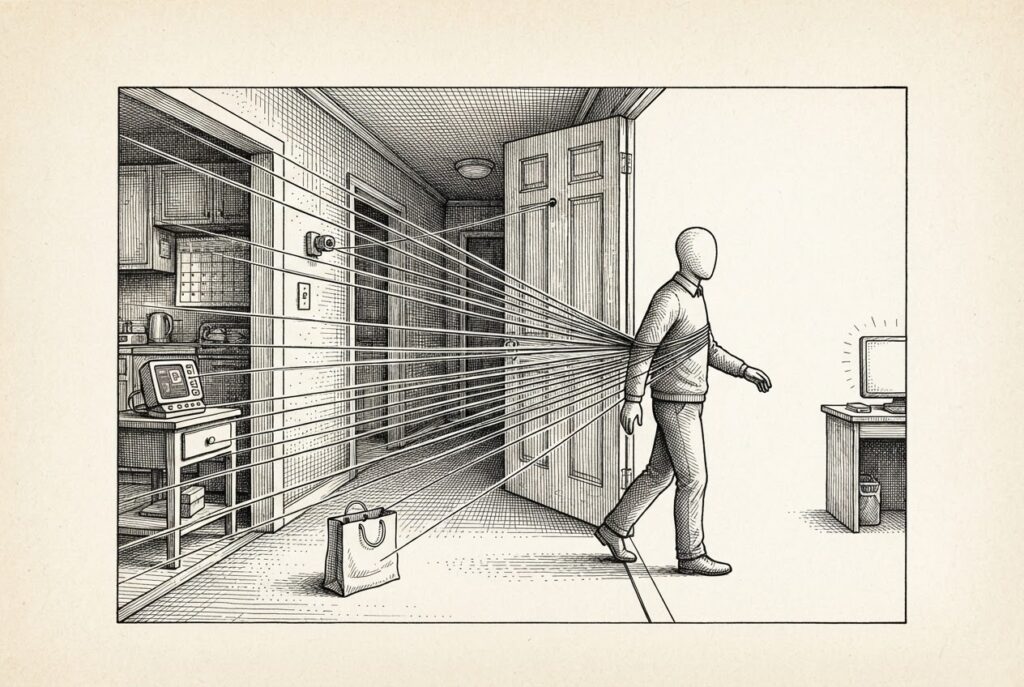
Canceling a personal AI agent subscription should feel like canceling a gym membership. Click, confirm, done. But if you have spent months teaching an agent how you order groceries, which calendar invites to decline, and how to negotiate your utility bills, canceling that subscription is less like leaving a gym and more like abandoning a house you can’t take with you.
By September 2026, the personal AI agent market hit a strange, quiet equilibrium. Muse Power launched at $20 a month. Google Home Premium Advanced has sat at $20 since October 2025. Alexa+ rolled out nationwide in February at $19.99 for non-Prime members. Three of the biggest names in the space, all within striking distance of the same price point. It is not a conspiracy—it is a market that decided twenty dollars is what a digital life manager is worth. But the price is a distraction. You can cancel the subscription. You cannot cancel the integration.
The real lock-in is depth. When you connect an agent to your Gmail, your calendar, your bank via Plaid, your health data from Withings, your shopping list, and your smart home cameras, you are building something the industry calls data gravity. Every connector you authorize adds another anchor point. The agent learns your rhythms—when you wake up, how you spend, what you eat, which meetings you skip. Leave that ecosystem, and you do not just lose a software interface. You lose the accumulated context that made the agent useful in the first place.
Matter 1.6, released in June by the Connectivity Standards Alliance, was a genuine win for hardware interoperability. The new Joint Fabric feature lets you add a smart device once and have it appear across Apple Home, Amazon Alexa, Google Home, and Samsung SmartThings simultaneously. Your light bulb is finally free. But Matter 1.6 stops at the physical layer. It ensures your bulb can talk to every hub in the house. It does nothing to move your agent’s understanding of when you like that bulb dimmed, or why, or what mood you were in the last time you asked.
Industry frameworks peg the switching cost at one to three months for a fully integrated workflow, and six to twelve months for deep domain lock—though these are practitioner estimates, not hard empirical data. The friction comes from multiple directions. Persistent memory does not port to a new assistant. OAuth scopes and connector permissions must be rebuilt from scratch. Scheduled automations, custom workflows, and saved prompt patterns simply do not transfer. There is no automated agent-to-agent protocol. You can export your raw chat history, but the thing that made the agent yours—the accumulated understanding of your life—stays behind.
Free alternatives exist. Home Assistant offers an open-source, privacy-first platform with over 2,700 integrations and local control that never touches the cloud. Sonos shipped its Sonos 27 MCP update in September as a free software upgrade for all S2 products, exposing 34 tools for any MCP-compatible agent to control multi-room audio. These are real options, but they require a level of technical comfort that most people signing up for a $20/month subscription are not looking for. They are the build-it-yourself path in a market that has spent a decade training people to prefer the just-works version.
The EU Data Act, which took effect in September 2025, includes virtual assistants in its portability rights framework. The United States has no equivalent federal mandate. So we are left in a market projected to hit nearly $20 billion by 2030, where the subscription is commodity-priced but the exit is not. The $20 a month is the cover charge. The real cost is the day you decide to leave, only to discover that the months of context, connections, and learned behavior you built inside that agent are not yours to take.