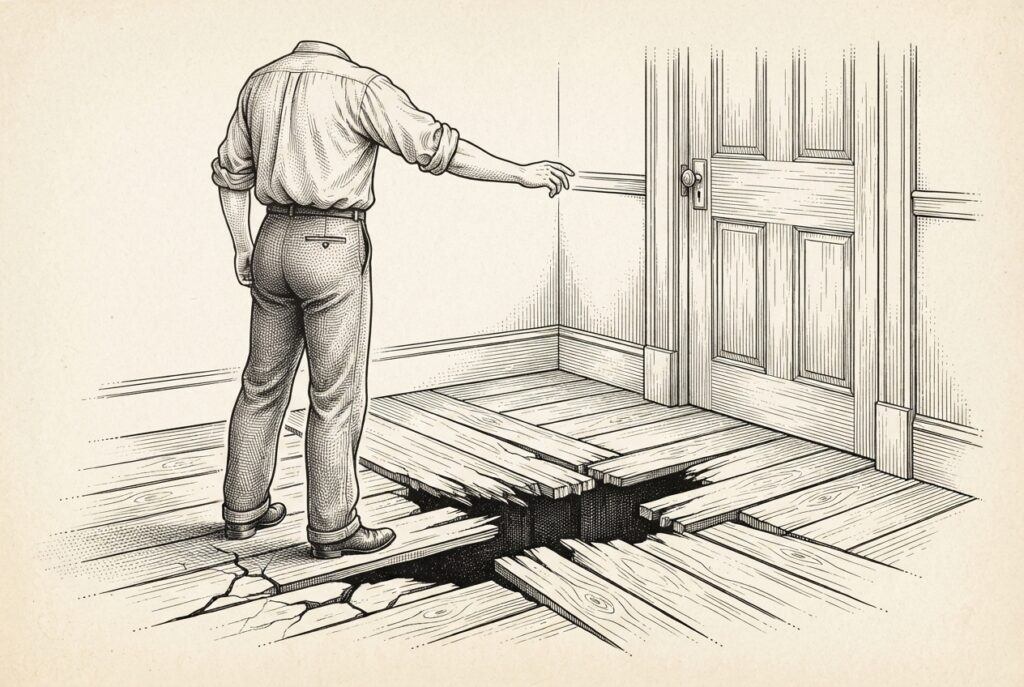
The smart home hub sitting on your counter is marketed as a seamless command center for your life, promising to manage lights, locks, and climate with a simple voice prompt. It feels like a leap into the future, but that polished interface hides a crumbling foundation. August 2026 has been a brutal month for the industry, exposing a harsh reality: we are rushing to build sophisticated AI agents on top of infrastructure that is fundamentally broken, unpatchable, and already compromised.
This is not just about a few buggy routers. It is a systemic accumulation of what we should call agent infrastructure debt. When your AI agent tries to secure your home, it relies on the very networking hardware that is currently being used to spy on users. The industry is racing to sell us Gemini Live Search or Alexa+ subscriptions, but they are ignoring the fact that the pipes these agents travel through are leaking.
Consider the Zbtlink ENDLESSDOORS discovery from early August. Researchers at VulnCheck found a factory-installed backdoor in over 20 router models, affecting more than 100,000 units worldwide. This isn’t a software glitch you can fix with a firmware update; it is a permanent, vendor-shipped vulnerability that runs as root and phones home to command-and-control servers every 35 seconds. The vendor dismissed the backdoor as an “after-sales debugging feature,” a move that treats consumer security as an optional inconvenience. For the consumer, the only fix is to throw the hardware in the trash. If your AI agent is running on one of these, your home’s “intelligence” is effectively a guest of whoever controls those servers.
The rot goes deeper than cheap hardware. At Black Hat USA 2026, researchers from Forescout Vedere Labs exposed 15 vulnerabilities in the TP-Link Omada Zero-Touch Provisioning ecosystem. This affects everything from routers and switches to the VIGI, Festa, Tapo, and Kasa lines—products found in millions of homes. Two of these flaws are unpatchable because they are baked into the hardware’s serial numbers. When you chain these vulnerabilities together, an attacker gains full control over your network. We are essentially inviting AI agents into a network where the front door is permanently unlocked.
Then there is the human element. In July, Brinks Home, a major security provider with over a million customers, suffered a massive breach. This wasn’t a sophisticated hack of their AI algorithms; it was a simple voice phishing attack on Microsoft Entra. The result? 4.9 million records, including 3.8 million support chat logs and 1.1 million customer contacts, were exposed. When your security provider can be compromised by a phone call, the promise of a “secure” AI-managed home starts to look like a liability nightmare. You can find more details on their official cybersecurity update.
For the average household, this is a hidden tax on smart home adoption. You pay for the device, you pay for the premium AI subscription, and then you pay again when you have to replace your entire network infrastructure because it was compromised at the factory. It is a cycle of forced obsolescence and financial loss. For the agent providers, this is a ticking time bomb of legal and reputational liability. If an AI agent is used to unlock a door or disable an alarm, and that agent is operating on compromised hardware, the question of who is responsible when things go wrong remains unanswered and expensive.
The industry is currently prioritizing the “intelligence” layer of the smart home, pouring billions into features designed to capture recurring revenue from AI subscriptions. Meanwhile, the “infrastructure” layer—the routers, gateways, and cloud adoption protocols—is being treated as an afterthought. This is a recipe for disaster. If the foundation is rotten, the agent built on top of it is not a helper; it is a vulnerability. Until the industry stops prioritizing speed-to-market over basic hardware integrity, the smart home will remain a high-stakes gamble for the people living inside it.