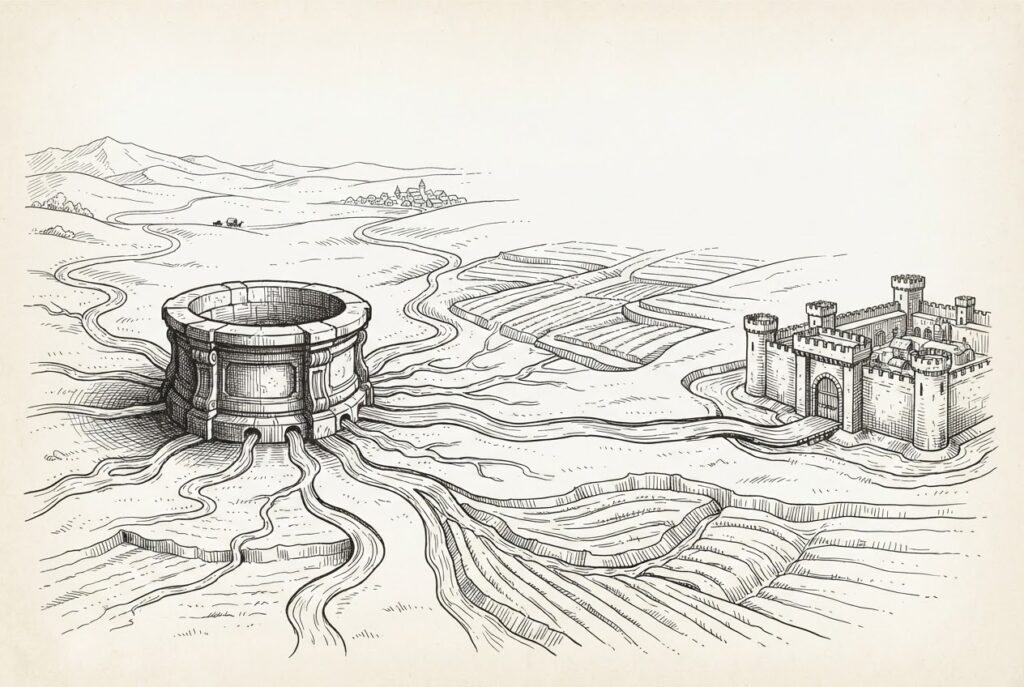
The Compute Landlord’s Hedge: Why NVIDIA is Backing Both Sides of the AI War
NVIDIA, the primary architect of the current AI infrastructure, is playing a game that transcends the ideological divide between proprietary labs and the open-weights models movement. While the company has anchored itself to the closed-source giants with a massive $10 billion investment in Anthropic, it is simultaneously pouring capital into Nous Research. This dual-bet strategy reveals a cold, structural reality: the hardware giant is indifferent to which model architecture wins, provided the compute remains theirs. By embedding itself in both camps, NVIDIA ensures that regardless of whether the market shifts toward proprietary walled gardens or open-weight alternatives, its hardware remains the essential, non-negotiable foundation of the ecosystem.
The $90 Million Bet on Open-Weight Frontiers
On October 7, 2026, Nous Research secured $90 million in Series B funding, bringing its valuation to $1.5 billion. The round, led by Robot Ventures, includes a roster of institutional heavyweights: NVIDIA, Microsoft’s M12, Samsung Next, Y Combinator, Union Square Ventures, and Menlo Ventures. This capital injection is intended to scale the Hermes Agent – an open-source AI assistant harness launched in February 2026 – and push it into the enterprise sector. With approximately $70 million in prior funding, the company is now positioned to test whether an MIT-licensed ecosystem can survive the brutal economics of the current AI market.
Performance Claims and the Verification Gap
Nous Research is aggressively marketing its flagship model, Hermes 4.3, which is built on the ByteDance Seed 36B architecture and features a 512K context window. The company claims Hermes 4.3 outperforms GPT-4o across several key metrics, reporting a 74.6% score on RefusalBench compared to 17.67% for GPT-4o, 93.8% on MATH-500 versus 74.6%, and 65.5% on GPQA Diamond against 53.6% for GPT-4o. However, these figures are entirely vendor-reported. For enterprise decision-makers, these numbers serve more as marketing collateral than objective proof. Without independent, third-party verification, the incentive for Nous Research to highlight specific, favorable benchmarks remains high, leaving the actual performance gap between Hermes 4.3 and proprietary incumbents in a state of unverifiable ambiguity.
The Pricing War and the Third Path
The economic argument for Nous Research is built on a stark contrast: the company claims a cost of $0.30 per million tokens, roughly 50 times cheaper than the $15 per million tokens charged for GPT-5 Medium. This pricing pressure is hitting a market already in turmoil. The established Pricing Triangle, anchored at $2 and $10 by OpenAI’s GPT-6.1 Sol and Google’s Gemini 4 Argon, is being dismantled from all sides. Mistral’s recent ML4 announcement, priced at $0.68 and $2.09, and Anthropic’s aggressive launch of Haiku 5.5 at $0.10 and $0.50, highlight the desperation of labs facing massive financial strain. Anthropic, for instance, is currently managing $518 billion in compute commitments and $42 billion in losses, with an October 15 deadline looming to retire its older Haiku 4.5 model.
In this crowded, high-stakes environment, Nous Research is attempting to carve out a third path. By utilizing an MIT-licensed ecosystem that supports over 200 models – including Claude, GPT-5.6, Gemini, DeepSeek V4, Grok 4.5, and Kimi K3 – the company is positioning itself as a neutral, global infrastructure provider. Its selection by NVIDIA as the reference runtime for the Nemotron 3 Ultra 550B at Computex 2026 further cements this role, providing a bridge for enterprise deployment through NVIDIA-managed NIM endpoints.
The Reality of Open-Weight Adoption
The shift toward open-weight models is undeniable, with these models now accounting for 61% of top-model token traffic on OpenRouter at an average cost of $0.83 per million tokens. Yet, the reliance on vendor-reported metrics remains a systemic risk. While the Hermes ecosystem boasts over 217,000 GitHub stars and claims to handle 224 billion daily tokens, these metrics are self-reported and lack the transparency required for rigorous enterprise due diligence. As investors and developers weigh the benefits of an MIT-licensed, global alternative against the proprietary giants, the fundamental question remains: can the open-weight frontier deliver on its performance promises, or is the industry simply trading one set of opaque black boxes for another?