Manus AI is in discussions to raise $500 million at a $4 billion valuation, which would make it China’s most valuable autonomous agent startup. The round is not yet closed and terms remain subject to change, but the deal signals a shift in how the market prices AI agents. If finalized, this valuation would be roughly double the $2 billion Meta agreed to pay for the company in December 2025, a deal that was ultimately unwound by Chinese regulators.
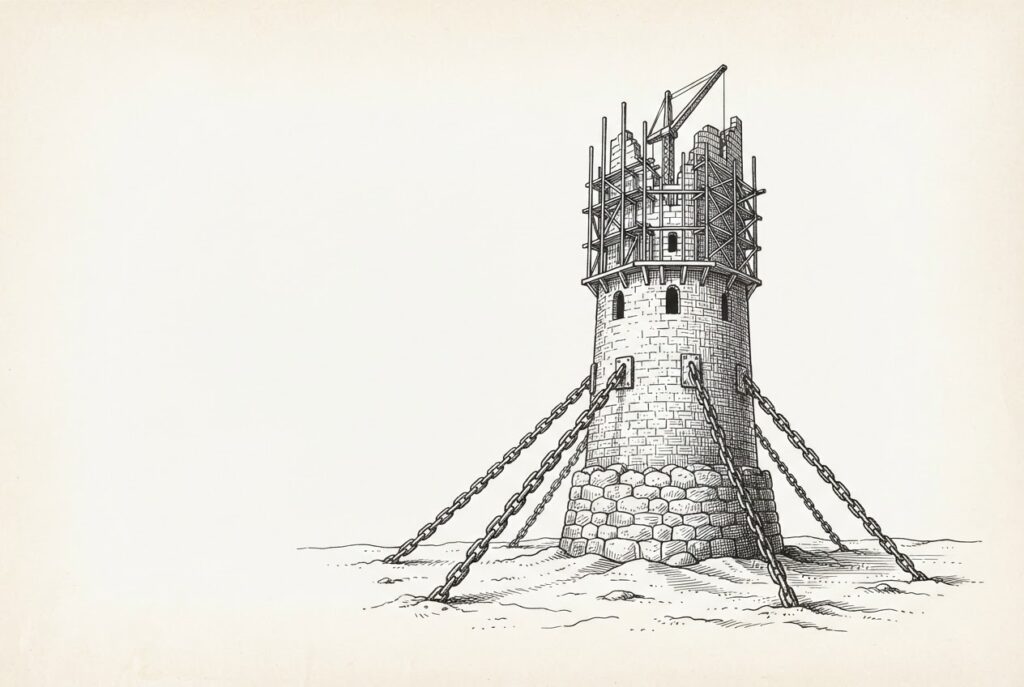
Beijing’s National Development and Reform Commission (NDRC) blocked the Meta acquisition on national security grounds in April 2026, and the company’s attempt to relocate its headquarters from Beijing to Singapore was effectively thwarted. Co-founders Xiao Hong and Ji Yichao were summoned by the NDRC and told they would not be permitted to leave the country. Despite that failed escape, Tencent is now in discussions to become the company’s largest shareholder. This suggests that for all the talk of decoupling, the capital flows between major Chinese tech players and high-potential AI firms remain deeply intertwined.
A $4 billion price tag puts Manus in the same conversation as major global players. For context, US-based Sierra reached a $15.8 billion valuation in May 2026, and Cognition was valued at over $10.2 billion in September 2025. Meanwhile, Instinct is reportedly raising $1 billion at a $10 billion valuation this same week. We are seeing a compression of valuation timelines across geographies; whether in the US, China, or Singapore, the market is aggressively pricing the potential for agents that can plan and execute multi-step tasks within their own virtual computers.
This round signals a pivot toward platform independence for Manus. By moving away from the failed Meta acquisition and securing domestic backing, the company is positioning itself to operate as a standalone entity, with a reported Hong Kong IPO serving as a potential comeback path. It is a pragmatic, if forced, evolution. The company is moving from being a potential acquisition target for a US giant to becoming a cornerstone of the domestic Chinese AI ecosystem, backed by early investors like HongShan Capital and ZhenFund alongside Tencent.
However, the “geopolitical premium” baked into this $4 billion valuation comes with clear risks. The company’s history with the NDRC serves as a reminder that in this sector, regulatory approval is as critical as technical capability. Investors are betting that Manus can navigate these constraints while scaling its general-purpose agent technology, but the company remains tethered to a regulatory environment that has already demonstrated its willingness to intervene directly in corporate strategy.
The Shadow Agent Gap highlights the difficulty of scaling these systems beyond controlled environments, and the emergence of smaller, specialized players like those seen in the Twin1 AI seed round points to a fragmented landscape. The Manus deal suggests that while the market is hungry for agent-native companies, the path to maturity is increasingly defined by regional silos rather than a unified global tech market.
Tencent’s potential position as the largest shareholder provides them with a powerful tool for their own ecosystem, but they also inherit the regulatory baggage that comes with the founders’ history. For enterprise observers, the takeaway is that the “agent race” is no longer just about who has the best model or the most compute. It is increasingly about which companies can survive the friction between global capital ambitions and the hardening borders of national technology policy.