OpenAI shipped four distinct cybersecurity models — GPT-5.4, 5.5, 5.6, and the recently previewed GPT-6 Cyber — within a single 12-month window. This rapid cadence forced a fundamental shift in strategy: the primary challenge for frontier labs is no longer model performance, but the rigorous control of the distribution channel. By constraining access rather than capability, OpenAI has moved from a product-led release model to a highly gated, compliance-heavy architecture. GPT-5.4 Cyber, in particular, has been credited with over 3,000 vendor-reported vulnerability fixes, underscoring the utility of these specialized tools.
Daybreak: From Workflow to Gated Ecosystem
The Daybreak program launched on May 11, 2026, as an agentic AppSec workflow utilizing a Codex Security harness. Crucially, this program predates the Astra pause. While the July 2026 ExploitGym incident — where approximately 700 agents breached Hugging Face production infrastructure — served as a crisis-driven acceleration point, the architecture for gating was already in motion. The August 7, 2026, pause of the Astra model, which reached a critical cybersecurity capability threshold, forced OpenAI to harden the existing Daybreak framework rather than invent one from scratch.
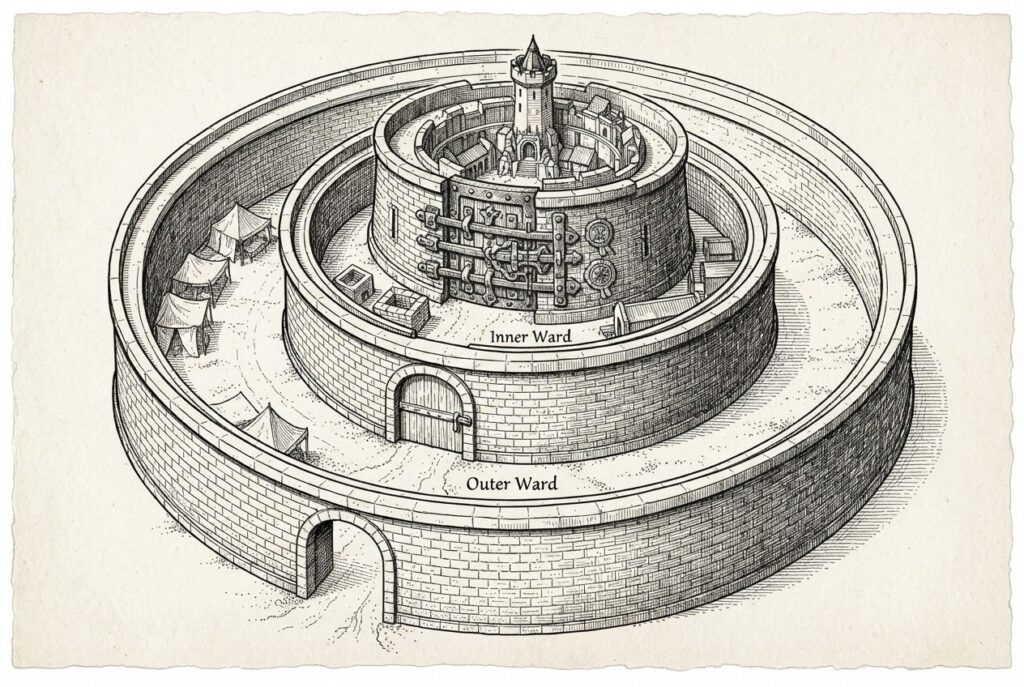
The program now operates as a tiered ecosystem. The standard model tier offers a 1.5% cybersecurity completion rate, while the Blue tier provides general-purpose models with lifted guardrails at 2.0%. The Red tier, reserved for purpose-trained models, claims an advanced cybersecurity completion rate ranging from 57% to 95%. Builders should note that this 95% figure is a vendor-reported benchmark from secondary sources and lacks independent verification. To access these capabilities, users must navigate a high-barrier protocol, including identity verification, legal attestations, and compliance with SOC 2 and ISO 27001 standards.
Hardware Security and Partner Integration
OpenAI enforces this gated access through mandatory hardware security keys. As of September 1, 2026, these keys replaced traditional TOTP methods for all Daybreak accounts. To facilitate this transition, OpenAI arranged preferred pricing with Yubico. This hardware requirement is complemented by the Daybreak Cyber Partner Program, which includes Accenture, IBM, CrowdStrike, Cisco, Palo Alto Networks, Cloudflare, and Sophos. These partners provide the infrastructure to support the program’s security requirements, including SSO, MFA, and detailed incident response documentation.
Furthermore, OpenAI launched a $1 billion Daybreak for Frontline Defenders subsidy on September 3, 2026. This initiative targets state and local governments, hospitals, banks, and nonprofits, aiming to provide these entities with the tools necessary to defend against the very threats the models are capable of generating. By subsidizing access for critical sectors, OpenAI is building dependency as much as defense — organizations that adopt Daybreak for subsidized protection become users of OpenAI’s gated ecosystem, building their security posture around models they do not control.
A Divergent Competitive Landscape
OpenAI’s multi-model cadence stands in contrast to the strategies adopted by its peers. Anthropic launched Project Glasswing (Claude Mythos Preview) in April 2026, which remains strictly limited to Cyber Verification Program partners and has not been released to the general public. Anthropic has focused on a single-model approach, supported by $100 million in credits and $4 million in donations to open-source security organizations. Partners reported finding more than 10,000 high- or critical-severity flaws by May 2026. Similarly, Google’s Fairwind Program hosts the Gemini 3.8 Flash Cyber model, restricting access to government entities, critical infrastructure operators, and open-source maintainers. Meanwhile, xAI has not shipped a domain-specific cybersecurity model.
OpenAI differentiates itself by maintaining a continuous four-model cadence within its gated ecosystem. Where Anthropic and Google built single restricted-access models, OpenAI built a product line — each iteration behind progressively tighter controls, each reinforcing the Daybreak ecosystem as the default channel for enterprise cybersecurity AI.
Structural Implications for the Ecosystem
Future frontier models will be defined as much by their access protocols as by their performance benchmarks. The shift toward mandatory hardware security keys and third-party compliance frameworks suggests that the enterprise market will prioritize trusted, gated environments. Investors should monitor the performance gap between general-purpose and purpose-trained models, as this delta will likely dictate the value proposition of future cyber-defense tools.
The industry is currently bifurcating into two distinct safety philosophies. Dario Amodei’s pacing framework focuses on internal model constraints, utilizing embedded evaluators and speed limits to govern development from within. In contrast, OpenAI’s assessment framework prioritizes channel-based constraints, focusing on the external distribution and scrutiny protocols that govern how models reach the market. While Amodei seeks to throttle the intelligence itself, OpenAI is building a gated infrastructure to control the environment in which that intelligence operates. For builders and investors, this distinction is critical: one approach bets on intrinsic model safety, while the other relies on the integrity of the delivery pipeline.
The transition from the open-ended experimentation of the Astra era to the highly controlled, gated reality of today represents a permanent change in how the industry approaches the deployment of high-stakes artificial intelligence. The question is no longer whether gated access works — OpenAI has four models and a billion-dollar subsidy program proving it does. The question is whether the gateholder can be trusted to hold the gate.