AI agents are rapidly becoming the internet’s primary traffic, yet they are fundamentally incompatible with the advertising and subscription models that have sustained the web for three decades. These agents do not view ads, they do not sign up for newsletters, and they do not browse storefronts. Instead, they consume data, compute, and API calls at a scale that renders human-centric monetization obsolete. AI crawlers already request content 100x to 10,000x more frequently than human visitors, creating a massive imbalance in resource consumption that current billing systems cannot reconcile.
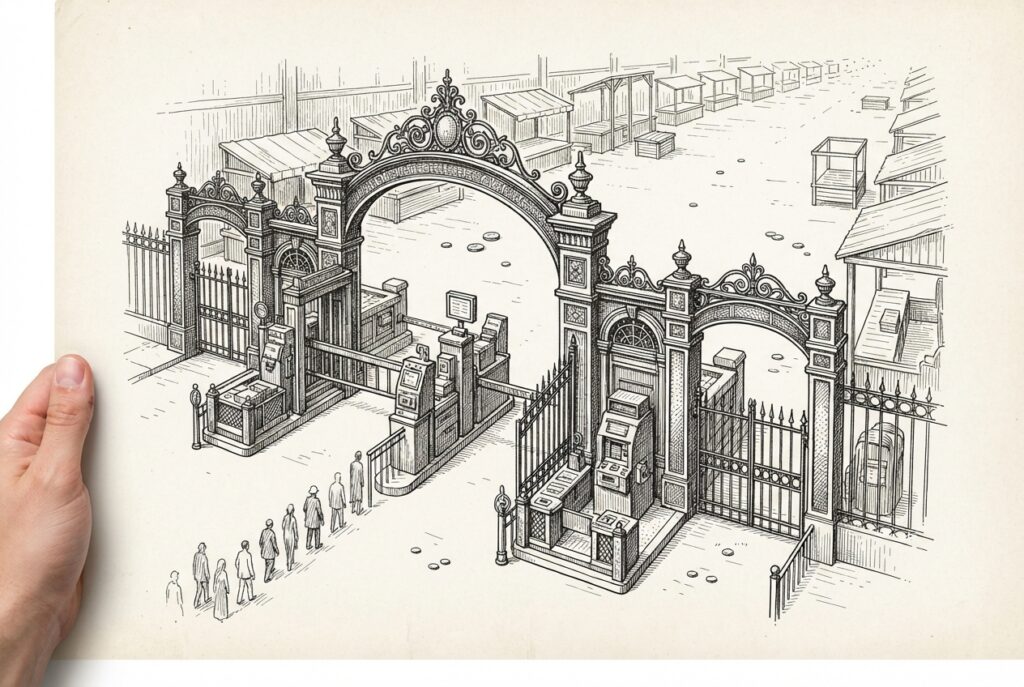
Cloudflare is attempting to address this shift with its Monetization Gateway, announced July 1, 2026, which integrates the x402 protocol directly into its edge network across 330 cities. This move builds on the foundation laid by the company’s Content Independence Day on July 1, 2025, which first allowed site owners to control which AI crawlers could access their content. The new gateway expands this capability, turning every web resource-whether a dataset, an API, or an MCP tool-into a micro-merchant. By utilizing the x402 protocol, Cloudflare enables a frictionless exchange where the payment itself serves as the credential. There is no signup, no API key, and no prior relationship required. As Cloudflare frames it, the agent becomes the primary buyer on the Internet, and the request becomes the transaction.
The x402 protocol operates on a simple loop: a client requests a payment-gated resource, the server responds with a 402 Payment Required status code along with the price and payment address, the client pays, and the server then releases the resource. Because this happens peer-to-peer, funds move directly to the seller’s wallet, bypassing the latency and fee structures of traditional banking. This architecture is designed to handle the high-frequency, low-value nature of agentic traffic, where a single agent might perform the work of an entire team around the clock. Pricing can be granular, such as $0.01 per API request or $0.99 for a successful support escalation, with settlement occurring in stablecoins at sub-second speeds. Cloudflare is part of the x402 Foundation, a coalition of more than 25 industry leaders, and the protocol itself operates under the Linux Foundation, having launched in April 2026.
Despite the technical readiness of this plumbing, the market reality is starkly different. While x402.org reports over 75 million transactions in the last 30 days, the composition of that volume is telling. More than 95% of these transactions are limited to protocol signaling or sub-cent micro-payments for data and compute. Artemis Analytics found that approximately half of all x402 transactions are artificial, driven by self-dealing or wash trading. The third category-actual buyer-seller commercial exchange-remains conspicuously absent at scale. CoinDesk reported in March 2026 that real daily volume was near $28,000, a figure that highlights the gap between protocol activity and genuine commerce.
A significant trust barrier further limits adoption. According to the Product.ai Trust in AI Commerce Report from April 2026, only 14% of consumers trust AI to execute purchases without human verification. Furthermore, 42% of consumers refuse to trust AI for transactions exceeding $25. Even if the infrastructure is ready to facilitate agent-driven commerce, the market is not yet prepared to delegate financial authority to autonomous systems. The x402 protocol handles the quote, payment, and settlement, but it does not handle authorization, identity, or disputes, leaving a massive gap in the consumer-facing layer of the stack.
Regulatory shifts provide a clear lane for these technologies. The CBDC ban that became law on July 10, 2026, cements private stablecoins as the only programmable digital dollar option through 2030. This has spurred competition among three primary architectures: x402, which relies on crypto-native stablecoin settlement on Base; Google’s Universal Cart Protocol, which utilizes card-rails via Shopify; and Mastercard’s Agent Pay for Merchants, which supports multiple rails including stablecoins. AWS has also signaled its support for x402, suggesting that the infrastructure layer is consolidating around these protocols.
Cloudflare has spent years building usage-based accounting for its own billing systems, and the Monetization Gateway is a sophisticated technical response to the reality that AI crawlers are now the dominant internet users. The plumbing is in place, and the gateway will be managed via dashboard, Cloudflare API, and Terraform. The question remains whether this architecture, designed for high-frequency signaling, can ever bridge the chasm to high-value, human-trusted commerce, or if it is destined to remain a closed loop of machines paying machines for the privilege of existing.