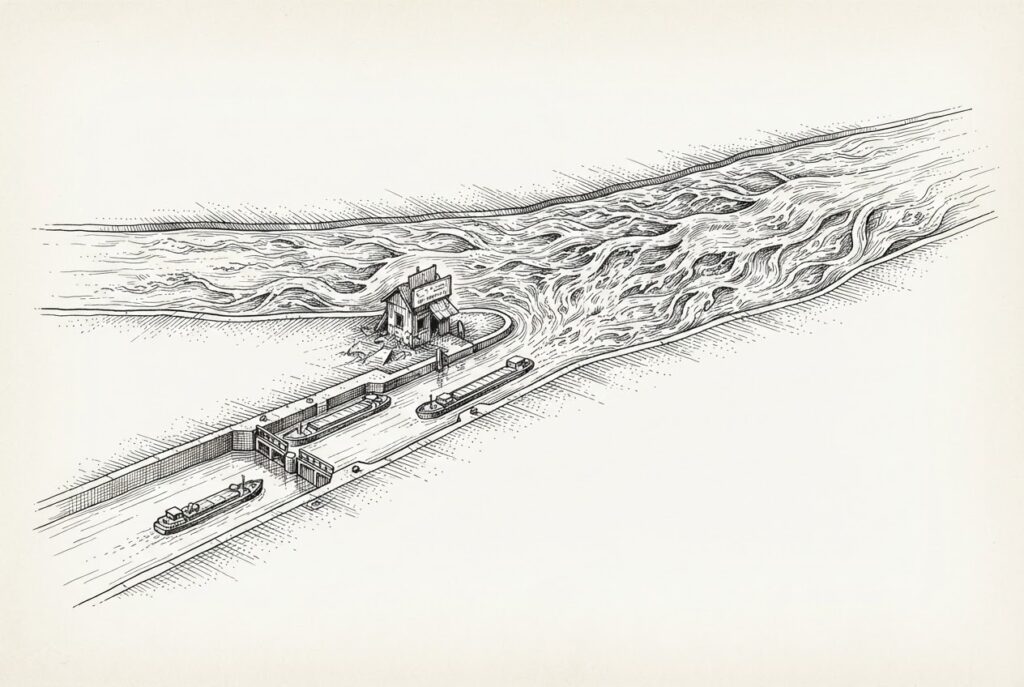
Card-based checkout for AI agents ended in March 2026. That was when ACP retired its in-chat flow. The industry finally admitted that forcing legacy payment rails into agentic workflows was unsustainable. Now, the market is splitting into two distinct, stablecoin-native replacement rails: the x402 protocol and the Machine Payments Protocol (MPP). They are not converging. They are diverging.
The numbers tell a story of two different worlds. As of October 11, 2026, x402 has recorded 191,751,598 cumulative transactions across 12 chains, according to agenteconomy.to. Coinbase reported that in Q2 2026, over 97% of onchain agentic transactions utilized x402. But how much of this is actual commerce? Estimates from BigGo Finance suggest 25-30% of this activity is likely test or leaderboard noise. If we strip away the vanity metrics, what is the real commercial throughput?
A major driver of this velocity is the evolution of the standard. Since the release of x402 V2 in December 2025, the protocol has introduced wallet-based identity, auto service discovery, and reusable sessions. By allowing agents to skip repaying on every single call, these reusable sessions have significantly lowered friction, fueling the massive transaction counts seen today.
Then there is MPP. Launched in March 2026 by Stripe and Tempo, it reports 46,198 cumulative events. It is a different beast. Early data from Visa via Artemis shows roughly 115,000 transactions and approximately $25,000 settled in its first few weeks. While Stripe has not released public volume figures, the mandate is clear: enterprise-grade, high-trust flows. Are these metrics even comparable? No. MPP events are not x402 transactions. One is built for scale, the other for compliance.
The structural divide is widening. x402 is positioning itself as an open-protocol standard. The Linux Foundation now hosts the x402 Foundation, led by Executive Director Michael Hursta as of October 1, 2026, with over 50 members. Integration is moving fast. AWS Bedrock AgentCore Payments now uses x402, and the AWS Bedrock Bazaar boasts over 10,000 x402 endpoints.
MPP is architecting for the boardroom. Its launch partners include Anthropic, DoorDash, Mastercard, Nubank, OpenAI, Ramp, Revolut, Shopify, Standard Chartered, and Visa. It promises tens of thousands of transactions per second with sub-second finality on Tempo. It is not trying to win the high-velocity, low-value game. It is building for session-based enterprise flows where regulatory constraints are the primary hurdle.
This bifurcation mirrors the broader identity-first, money-later pattern. We are seeing payments drift from cards to permission tokens. The real question is not which rail wins. It is what happens to these systems when the initial excitement fades. Can they sustain themselves without the test-driven activity that currently pads the numbers?
Nobody has settled on how this infrastructure should look. We see fragmentation across every layer of the stack. This is not a bug; it is a feature of a maturing economy. The agent is becoming the primary economic actor. The card checkout model was just a temporary bridge. The rails being laid now are the permanent infrastructure for a machine-to-machine economy. But we must still address the agentic commerce liability gap before these systems can truly scale.