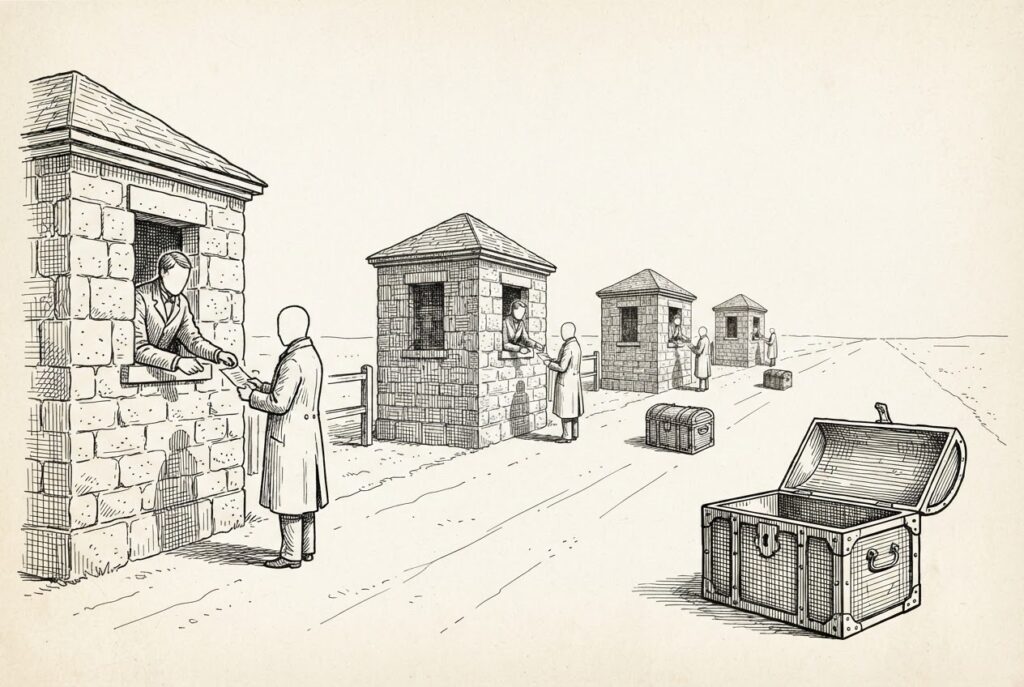
When Meta and Sierra introduced the Personal Agent Protocol on October 6, 2026, the architecture revealed its priorities in the ordering itself. The protocol is designed to handle authentication, consumer control, and company visibility: a business can tell which agent identity is acting for a customer and what it is allowed to do. Payments are not in that scope. Sierra’s announcement lists them under what comes next, in a sentence about the future: “Payments extensions could let a personal agent complete a purchase without sharing credit card information.” The v0.1 specification is promised later in October, along with design workshops and a reference implementation. The money layer is on the roadmap, not in the protocol.
The coalition is named carefully, and the names split by announcement. Sierra names partners at Genesys, Instinct, Rocket, Shopify, Stripe, and Walmart. Meta’s own announcement, “A New Way for Businesses and Personal Agents to Work Together,” adds NICE and Decagon, per coverage of that post; Meta’s page returned an error when fetched directly, so those two names ride as reported rather than read. Tony Bates, chairman and CEO of Genesys, framed the problem the protocol solves: “Personal AI is creating a new front door to the enterprise. Brands need a trusted way to know who an AI agent represents, what it’s authorized to do, its intent, and how to work with it securely.” Kevin Miller, head of payments at Stripe, put the money question politely: “A customer relationship doesn’t start or end at checkout.”
The ordering is becoming the pattern. Anthropic’s Claude Commerce Agents blueprint, shipped in September, draws its own boundary around the money layer: “Nothing places an order, charges a card, or changes a live listing: checkout renders the cart for the host to complete.” The checkout card links to the host’s own route or the platform’s hosted checkout URL, and the model never sees it. Google’s Universal Commerce Protocol, Visa’s Trusted Agent Protocol, and the Machine Payments Protocol run the same play: identity, intent, and signaling ahead of settlement. TAP and Agent Pay give a merchant the signal that an agent is initiating a transaction, and, as our liability-gap analysis noted, they do not re-allocate liability for non-fraudulent errors. Identity is cheap to standardize. The money layer is where the cost of a wrong purchase lands.
The one major entrant that shipped money first is the instructive case. On September 29, 2025, Stripe and OpenAI launched Instant Checkout in ChatGPT alongside the Agentic Commerce Protocol: in-chat purchasing from US Etsy businesses, more than a million Shopify merchants announced as coming, a Shared Payment Token scoped to a merchant and cart total, the merchant charging the payment method as usual. In early March 2026, OpenAI retired the in-chat flow after roughly a dozen Shopify merchants went live and sales came in near zero, per Rye’s March 5 report; OpenAI’s March 24 shopping update confirmed the retreat to discovery and redirect through retailer apps. The protocol itself survived, rescoped toward large integrated retailers. Checkout shipped first, and the checkout surface is the part that did not hold.
The deferral has an economic shape. PYMNTS Intelligence’s September 2026 agentic shopping study puts the disagreement plainly: 93% of merchants believe AI or agent providers should bear the financial loss when an agent makes an incorrect purchase, and only 28% are willing to offer their full product range to agents under current terms. The party best positioned to prevent the error carries none of the cost, so a new protocol does the rational thing and claims the layer that does not pay when the agent buys wrong. That keeps the liability gap open and the gate contested, as our market-structure piece laid out.
The next test is on the calendar. PAP’s v0.1 text is promised later this month, and payments are deferred in the same breath that promises it: announced but not shipped, twice over. Watch two things in the specification. Does the payments extension land or slip. And who is on the hook when an agent buys wrong. So far every entrant has shipped identity first and left that question to someone else, and the launch analysis covered the layer they claimed. The money layer stays unclaimed.