Restricting the Autonomous Transaction
Shopify has formalized its stance on agentic commerce by updating the robots.txt policy for its storefronts to explicitly prohibit autonomous agents from finalizing purchases. Effective July 15, 2025, the platform mandates that “Checkouts are for humans. Do NOT complete checkout, payment, or order placement automatically — no scripted form fills, browser automation, or end-to-end agent flows that finalize payment without an explicit, contemporaneous human approval step.” It is critical to note that this directive applies specifically to individual merchant storefronts, not the shopify.com corporate site. While President Harley Finkelstein has famously declared that “AI is now Shopify’s native language” during the Q1 2026 earnings call, this policy signals a definitive boundary to that integration.
The Discovery-Checkout Divide
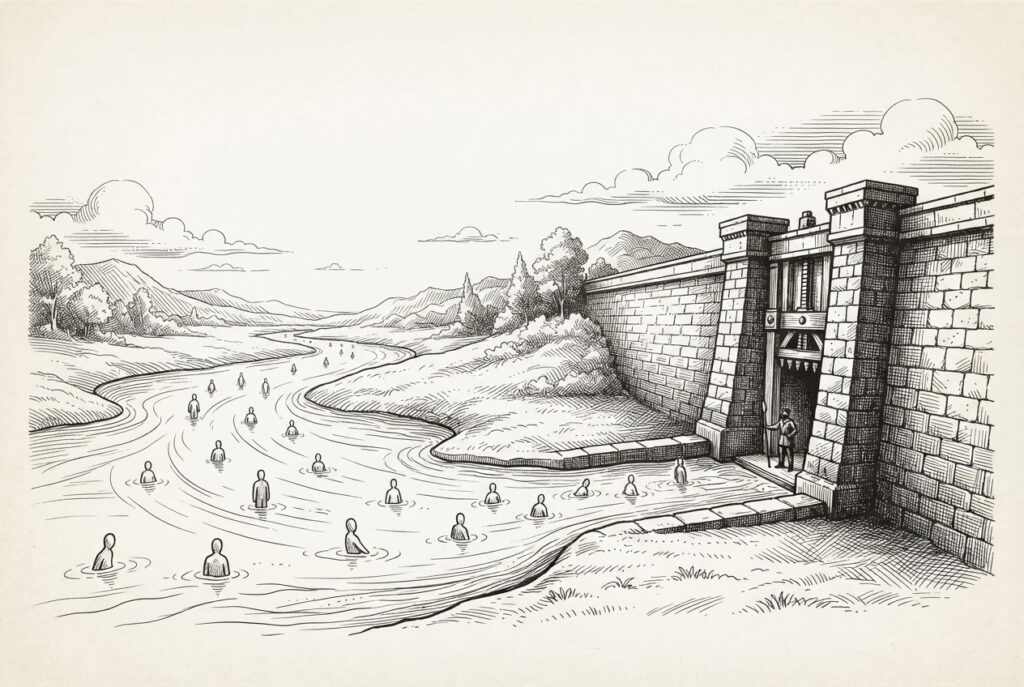
The policy creates a functional bifurcation in how AI interacts with commerce. Discovery crawlers, including GPTBot and PerplexityBot, retain access to product, collection, and page paths, ensuring that AI-driven research remains viable. However, the /checkout and /cart paths are now restricted. This is not a hard technical block but an advisory directive, positioning Shopify in a strategic middle ground between the divergent retailer postures—ranging from total welcome to total exclusion—that have defined the industry’s recent response to agentic traffic.
The Liability and Infrastructure Gap
The primary driver for this restriction is the absence of a robust framework for handling agent-driven financial errors. As Yang Lu, CIDO at Tapestry, observed, “People are adopting agentic commerce much more slowly than other AI consumer tools; we’re comfortable using AI to browse and discover products, but aren’t yet ready to hand over our credit cards.” This consumer hesitation is matched by merchant anxiety. According to PYMNTS Intelligence data from September 2026, 93% of merchants believe AI providers should bear the financial loss for agent errors. Currently, the payment infrastructure lacks a standardized reason code for “agent error,” creating a significant liability void for businesses.
Fragmenting Market Standards
The industry is currently struggling to establish a unified approach to autonomous commerce. While Shopify is building mechanisms to control agent checkout, it simultaneously serves as the platform that made Muse the default interface for Meta’s agent. This tension is mirrored by competitors: Constructor recently announced a Stripe-powered Agentic Checkout, while TikTok launched its own Shopping Assistant and Buy Direct features. These disparate developments highlight a lack of consensus on how to manage the risks inherent in autonomous transactions, a theme we explored in our recent analysis of the broader liability gap.
The Reality of Agent Readiness
Despite the rapid growth in AI-driven traffic—which saw an 8x increase on Shopify in Q1 2026—the underlying infrastructure remains immature. The PYMNTS/Visa GDSI report indicates that only 11% of SMBs are currently agent-ready. Shopify’s requirement for UCP/MCP endpoints, which mandate buyer approval before payment, is an attempt to impose a standard on an ecosystem that is still learning to manage the complexities of AI-driven traffic. The platform is signaling that while it will continue to foster AI-driven growth, that expansion cannot come at the expense of payment integrity.
Balancing Innovation and Integrity
Shopify’s current approach is a calculated effort to maintain the benefits of AI-driven discovery while mitigating the risks of unverified autonomous transactions. By drawing a line at the checkout, the company acknowledges that the currency of commerce still requires a human signature. Whether this advisory policy will be sufficient to satisfy merchants and protect against the inevitable errors of agentic commerce remains an open question, particularly as the broader market continues to experiment with varying levels of automation. Until standardized protocols emerge, the burden of proof—and the cost of failure—will likely remain with the merchant.