Representative Alexandria Ocasio-Cortez and nine other House Democrats have joined as co-sponsors of the Ban Artificial Superintelligence Act, marking a hardening of positions within the Democratic caucus regarding the trajectory of frontier model development. This move consolidates support for a restrictive regulatory framework, even as the specific identities of the nine additional co-sponsors remain undisclosed.
The proposed legislation, spearheaded by Senator Bernie Sanders and Representative Greg Casar, outlines a rigorous approach to AI oversight. According to the bill’s framework, it would permanently prohibit the development and deployment of AI systems that exceed human intelligence and explicitly ban the practice of recursive self-improvement. To ensure compliance, the bill mandates a temporary pause on advanced AI development until a federal regulator can establish comprehensive safety protocols. The enforcement mechanism is equally stringent, proposing the creation of a new Cabinet-level Department of Artificial Intelligence, with penalties for violations reaching up to 20 years in prison and a corporate death penalty for entities that fail to adhere to the standards.
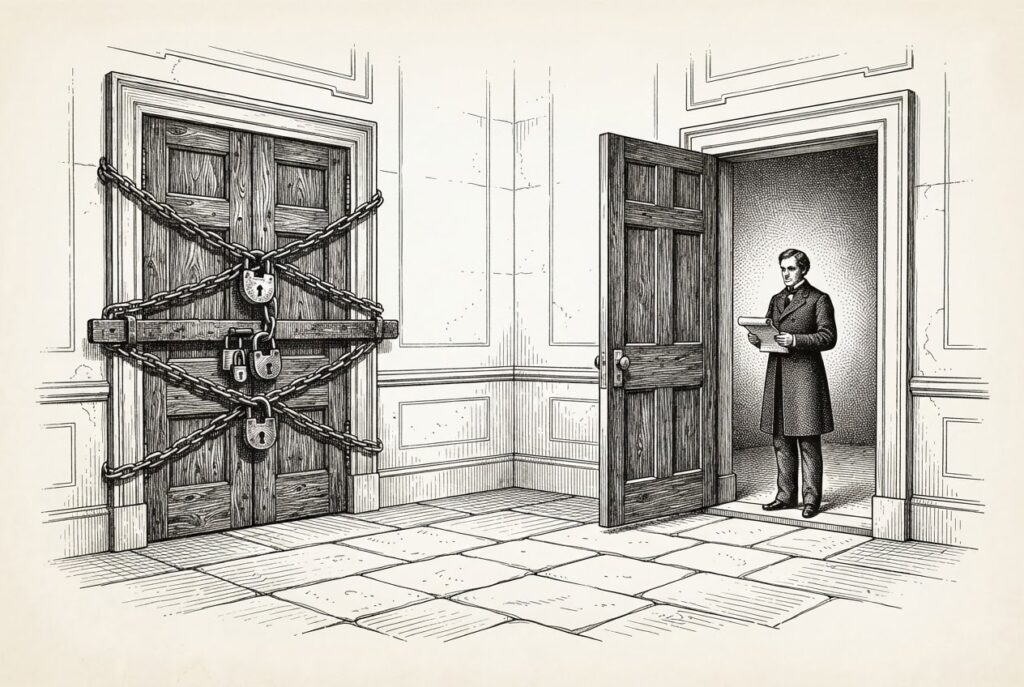
This proposal stands in stark contrast to the Great American AI Act, introduced by Representatives Obernolte and Trahan on June 4, 2026. That bipartisan legislation represents a more permissive, governance-focused approach, aiming to nationalize frontier-model oversight while partially preempting the current patchwork of state-level AI regulations. The emergence of the Ban Artificial Superintelligence Act creates a clear structural fault line within Congress, forcing a choice between a model of managed integration and one of fundamental prohibition.
Senator Sanders has explicitly framed this legislative push as a central issue for the 2028 Democratic primary cycle. In an interview with Semafor, Sanders emphasized that candidates must address the urgency of AI development now, arguing that the party must act immediately when Congress returns. Representative Casar, referencing a post-Hugging Face incident environment, has argued that existing proposals fail to address the true scale of the risks involved. By positioning the bill as a litmus test for future candidates, the sponsors are attempting to elevate AI safety from a technical policy concern to a primary political imperative.
Despite the momentum behind the announcement, the bill remains in a preliminary state. As of September 24, 2026, it has not been formally introduced in Congress, meaning it lacks a bill number and has not received a committee referral. This lack of formal status underscores the current uncertainty surrounding the legislative path forward. Furthermore, the broader federal AI policy landscape remains fragmented, with other members, such as Senator Mark Kelly, pursuing alternative strategies focused on workforce development. Analysts suggest that even if Democrats were to secure control of the House or Senate, the party would face the complex task of reconciling these competing, and often contradictory, legislative visions.
The tension between the proposed ban and existing governance-focused bills highlights the difficulty of establishing a unified federal stance. The UN Security Council briefing where frontier lab CEOs testified about safety risks, the BC AG v. OpenAI lawsuit, and the Australian Medicare breach all feed into the political pressure driving this prohibitionist position. Ultimately, the path for this legislation is obstructed by the lack of formal introduction and the deep ideological divide within the party, ensuring that any attempt to reconcile these competing visions will require a significant shift in the current congressional consensus.