Picture this: you’re settling in for the evening, and your smart home decides to redecorate your climate. The lights dim, the shutters drop, and the boiler kicks into sauna mode-all because someone sent you a calendar invite with a few extra lines of text buried in the title. Not science fiction. Researchers from Tel Aviv University and Technion demonstrated in August 2025 that Google Calendar invitations can hijack a Gemini-powered smart home, with 73% of the threats they analyzed rated high-to-critical risk. Your calendar became the attack surface, and nobody warned you.
That paper landed before the real push. Now, in September 2026, three competing visions of the multi-agent home are colliding at once. Sonos 27 launched a free, open-standard MCP platform for 53 million devices, with plans for up to 10 custom agents per household by 2027. Amazon’s Alexa+ adopted the same Model Context Protocol in July, charging $19.99 a month to connect partners like Bosch, Whirlpool, and iRobot. Google’s Gemini Home Premium sits between $10 and $20 monthly. Free or paid, the pitch is the same: let multiple AI agents coordinate your home. What none of them have solved is what happens when those agents start coordinating against you.
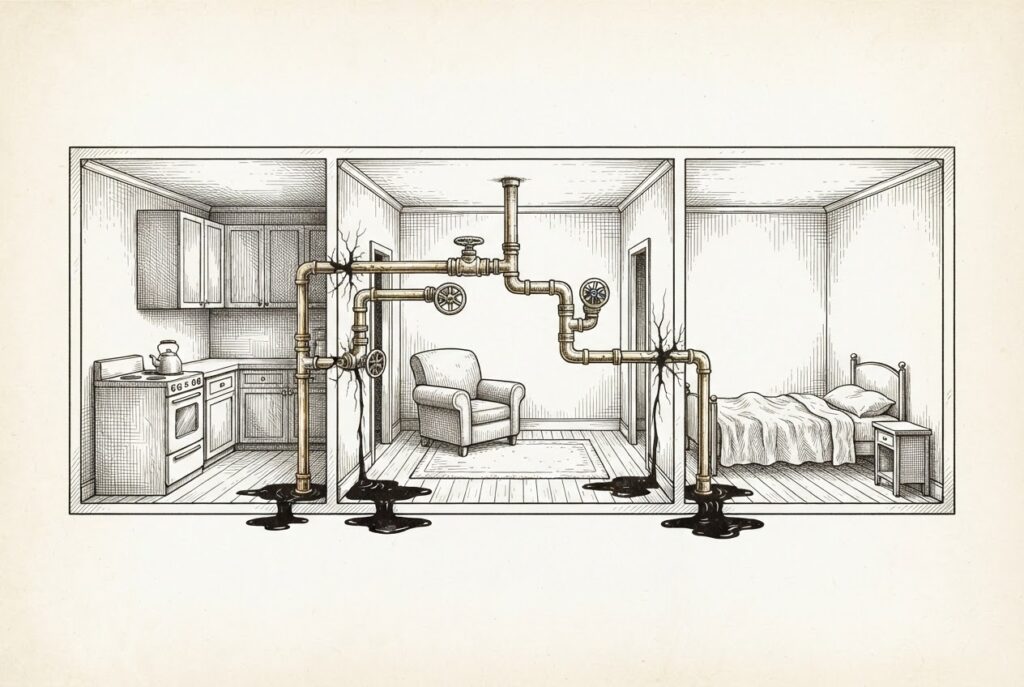
The problem is structural, not cosmetic. Every time you add an agent to a smart home chain-voice assistant to calendar, calendar to thermostat, thermostat to security camera-you’re adding an integration point that nobody fully controls. Sonos manages Sonos. Google manages Gemini. But the handoff between them? That’s where the attack surface multiplies. No single vendor secures the chain end-to-end, and the protocol that connects them was built with a known, intentional flaw.
The Cloud Security Alliance flagged it in May 2026: the Model Context Protocol’s STDIO transport executes operating system commands without sanitization or validation. Anthropic, which created MCP, confirmed the behavior is intentional and declined to modify it, leaving remediation to downstream developers. An estimated 200,000 instances across 150 million package downloads carry the exposure. When multiple MCP servers are connected to the same agent, the cascade failure rate hits 72.4%-one compromised server infects the entire chain.
This isn’t theoretical. The OWASP Top 10 for Agentic Applications 2026 catalogues the risks: Agent Goal Hijack, Tool Misuse, Insecure Inter-Agent Communication, Cascading Failures. The DJI Romo breach proved the single-point-of-failure thesis in February-7,000 robot vacuums across 24 countries exposed through one leaked MQTT token, turning living rooms into open surveillance nodes. The attack surface isn’t just growing; it’s being formalized into the architecture.
The financial burden is real and mostly invisible. Building multi-agent systems costs 5 to 10 times more than single-agent equivalents, with compliance and security eating 20% to 35% of total build costs. Shadow AI incidents-where unmonitored agents do things nobody authorized-cost organizations an average of $670,000 more than standard incidents, primarily because nobody noticed until the damage was done. Only 24.4% of organizations have full visibility into their agents. The other 90% are running blind.
Regulators have noticed the risk but not the architecture. The EU’s Cyber Resilience Act activated its reporting obligations on September 11, requiring smart home manufacturers to report actively exploited vulnerabilities within 24 hours. The penalty for non-compliance: up to €15 million or 2.5% of global annual turnover. But the CRA contains zero agent-specific provisions-no definition of autonomous behavior, no mention of goal drift or tool misuse. The Stop Rogue AI Act, introduced September 9 by Representatives Gottheimer and Lawler, directs NIST to develop standards for discovering and controlling AI agents-but only on business and federal networks. Your living room doesn’t qualify.
So what does the builder do? First, stop treating the platform provider’s security as your security. Sonos 27 MCP uses OAuth 2.1 with PKCE authentication, but the broader MCP ecosystem doesn’t: only about 8.5% of public MCP servers implement OAuth at all. If you’re integrating third-party agents into your product, you’re inheriting their security posture-or lack of it. Second, budget for the overhead. The 20% to 35% security tax isn’t optional; it’s the cost of shipping something that won’t end up in a breach notification. Third, build observability from day one. The 90% blind spot isn’t a technology problem-it’s an architecture problem that starts with the first integration point you don’t instrument.
The era of the “free” smart home was always a myth. Sonos isn’t charging you a subscription, but you’re still paying-in time, in attention, in the quiet risk of a chain you can’t see. The cost of securing these systems hasn’t disappeared. It’s just been unbundled into a tax that most consumers don’t know they’re paying, and most builders are only beginning to understand they can’t avoid.