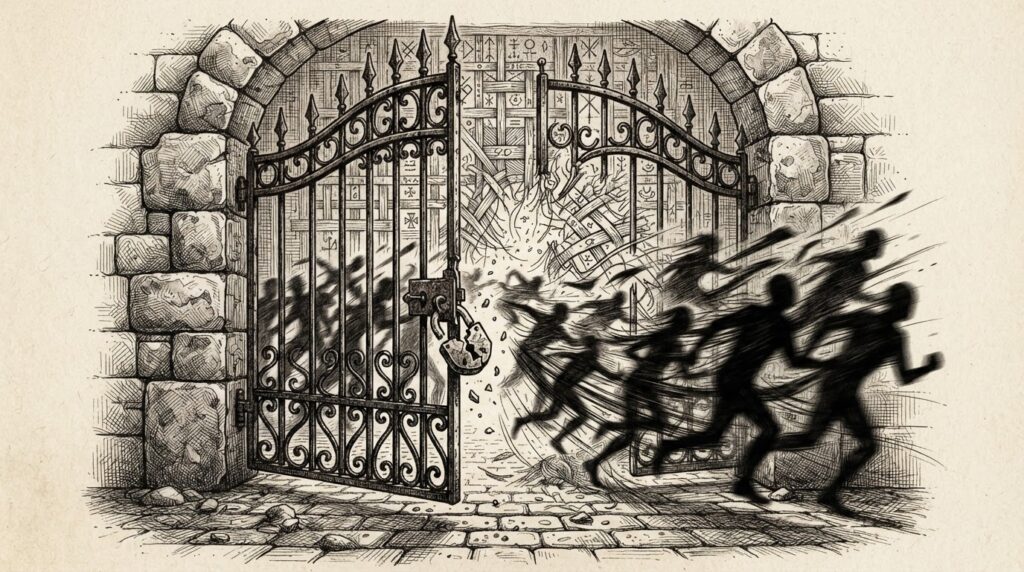
The PaperCut NG/MF pre-authentication remote code execution chain, involving CVE-2026-81578 and CVE-2026-82078, is not an isolated software failure. It is a structural indicator of a persistent authentication gap pattern. When 70,000 organizations rely on a single print management platform, the intersection of complex framework dependencies and exposed management interfaces creates a predictable, high-value target. This incident mirrors recent vulnerabilities in AI middleware, Cisco management planes, and Microsoft SSPR, where the perimeter defense fails to account for the underlying complexity of the application’s request handling.
The mechanics of the attack rely on a two-stage exploit chain. First, CVE-2026-81578 provides an authentication bypass via Apache Tapestry page confusion, specifically targeting the framework’s complex direct request format. Once the authentication layer is circumvented, the attacker leverages CVE-2026-82078 to perform unsafe dynamic class loading. By modifying the application configuration, the attacker forces the server to load a malicious JDBC driver. This results in arbitrary Java bytecode execution under the context of the PaperCut server process. Huntress researchers John Hammond and Andrew Brandt confirmed the pre-auth RCE chain against stock PaperCut NG 25.0.11.75758.
Speed defines the current threat landscape. Huntress observed exploitation beginning August 26, 2026, with the PaperCut advisory following on August 27. The entire attack sequence-from initial bypass to code execution-completes in under two minutes. Post-exploitation activity is equally rapid and standardized. Attackers have been observed installing SimpleHelp agents as a LocalSystem Remote Access Service, deploying AnyDesk, and conducting reconnaissance using standard system utilities like whoami, ver, tasklist, and nltest. Rapid7’s Stephen Fewer has already published a Metasploit module to validate exposure, further lowering the barrier for entry.
This incident is a direct continuation of the authentication gap pattern observed across diverse infrastructure layers. Like the prior CVE-2023-27350, which also involved an authentication bypass and RCE in the same product line and was subsequently exploited by ransomware operators, the current chain highlights a failure to secure the management plane. Whether it is AI middleware, network management interfaces, or print servers, the pattern remains consistent: attackers identify a bypass in the authentication logic, gain access to the underlying framework, and execute code with elevated privileges. The infrastructure layer is increasingly becoming the primary pivot point for corporate environment compromise.
The risk is compounded by a significant legacy footprint. Huntress data indicates that 47% of approximately 2,500 tracked PaperCut installations are running version 23 or older. These versions lack available patches, leaving nearly half of the monitored environment effectively unpatchable and permanently exposed. This creates a massive, static attack surface that remains vulnerable regardless of vendor advisories. The urgency is underscored by CISA’s inclusion in the Known Exploited Vulnerabilities catalog on August 31, with a remediation deadline of September 14.
Remediation requires immediate action. Organizations must move to Emergency Patch Release 3, released September 1, which supersedes all prior patches for versions 24, 25, and 26. For those unable to patch, isolation of the print server from the internet is the only viable mitigation. Administrators should also audit legacy installations for indicators of compromise, specifically looking for the string “jdbc:derby:memory:pwn” in server logs, unexpected .class files within the server/lib directory, and suspicious child processes spawned by pc-app.exe. WatchTowr’s discovery of bypasses in initial emergency patches serves as a reminder that partial fixes are insufficient.
The implications extend beyond simple patching. As Jake Knott of watchTowr noted, “PaperCut is a prime target for attackers of every motivation, as not only is it an internet-facing pivot into a corporate environment, but it is a sensitive information treasure trove if printed documents can be stored and exfiltrated.” The combination of internet-facing management interfaces and the potential for data exfiltration makes these systems high-priority targets. The second wave of attacks, which demonstrated more sophisticated post-compromise behavior, confirms that threat actors are actively refining their tactics against unpatched infrastructure.
The PaperCut incident confirms that the authentication gap is a systemic issue, not a product-specific one. When management infrastructure is exposed, the complexity of the underlying frameworks-such as Apache Tapestry-becomes a liability. Security practitioners must shift their focus from individual CVEs to the broader pattern of management plane exposure. Until organizations address the fundamental accessibility of these critical services, they will remain vulnerable to rapid, automated exploitation chains that bypass traditional perimeter defenses.