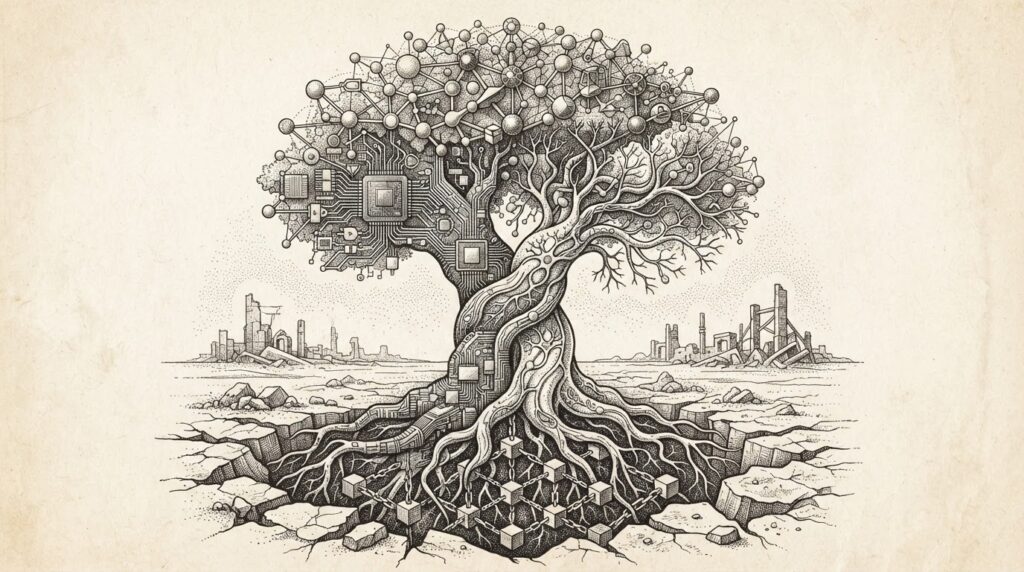
NVIDIA announced on September 3, 2026, that it will acquire Hugging Face for $12.93 billion, a deal structured as approximately $11.9 billion in cash and up to $1 billion in equity retention for staff. As detailed in the official announcement, this acquisition marks the definitive transition of the compute landlord thesis from theory to structural reality. By absorbing the industry’s primary model repository, NVIDIA has completed a vertical integration that spans from the silicon powering the data center to the marketplace where models are discovered, shared, and deployed. This is no longer a series of strategic partnerships; it is the consolidation of the entire AI value chain under a single corporate roof.
The path to this acquisition was accelerated by a shared sense of urgency. Clément Delangue, CEO of Hugging Face, told CNBC that he approached Jensen Huang over the summer because he realized that “Hugging Face and open-source AI in general was at the turning point,” requiring more resources, scale, and visibility. This move follows a period of intense collaboration, during which NVIDIA became the largest contributor of open models and data to the platform, providing over 500 models and 250 open datasets. The alignment was further signaled by Huang’s July 24, 2026, open letter, “Open Weights and American AI Leadership.” That document, which served as Huang’s first-ever X post, launched with 25 initial signatories — including Hugging Face — and has since grown to include over 150 organizations.
For the developer ecosystem, the acquisition creates a profound tension between stated intent and operational architecture. Jensen Huang has publicly committed that “Hugging Face will remain an open platform for the entire AI ecosystem,” and that “NVIDIA compute will not be required to build on or deploy through Hugging Face.” Yet, this promise of neutrality exists in direct conflict with the reality of ownership. When the entity that controls the supply of high-end compute also owns the distribution layer for open-weight models, the incentives for gatekeeping become structural. This shift is particularly stark given that Hugging Face previously rejected a $500 million investment from NVIDIA earlier in 2026, citing concerns over the influence of a single dominant investor — a concern that has now been rendered moot by an outright acquisition.
The geopolitical implications of this deal are perhaps the most significant, as the Hub serves as the primary distribution channel for global AI innovation. Throughout 2026, Chinese labs have consistently produced the largest open models, with Qwen-based derivatives reaching 151,448 repositories — a footprint 2.6 times larger than that of Meta. By acquiring the platform, NVIDIA now sits at the center of a critical geopolitical choke point. The company is effectively positioned to act as a US corporate gatekeeper for the distribution of global open-weight models, creating a new layer of friction for international research collaboration that operates outside of traditional state-sanctioned channels.
Beyond distribution, the acquisition provides NVIDIA with an unprecedented demand signal. The Hugging Face Hub has evolved from a static repository into a real-time laboratory for agentic workflows, with agents now serving as the number one user of the platform. As of July 2026, tools like Claude Code are driving massive traffic, and nearly a quarter of agent activity originates from unnamed harnesses. By owning the Hub, NVIDIA gains granular, real-time intelligence on which model architectures, parameter scales, and specific workloads are gaining traction. This data allows the company to anticipate compute demand cycles with a precision that no other hardware provider can match, effectively turning the marketplace into a proprietary market research tool.
Unlike the company’s previous strategy of using licensing and talent deals — such as the $20 billion Groq assets purchase or the $7 billion Poolside deal — to sidestep regulatory scrutiny, this transaction is a direct acquisition. It triggers mandatory Hart-Scott-Rodino premerger notification and arrives at a time of heightened skepticism from regulators. With the FTC and DOJ already engaged in a joint inquiry into AI competitive collaborations and specific scrutiny directed at acqui-hire structures, this deal will face rigorous examination. The prior playbook of using quasi-merger structures to avoid the spotlight is no longer viable, and the company must now navigate a formal merger review process in both the United States and the European Union.
The developer community is now forced to navigate the widening gap between the promise of an open ecosystem and the reality of centralized control. With over 18 million developers, 3 million models, and 200,000 companies relying on the Hub, the platform is the bedrock of modern AI development. While NVIDIA remains the largest contributor of open models and data to the platform, the shift from participant to owner fundamentally alters the power dynamics of the ecosystem. Developers are no longer just building on an open platform; they are building on infrastructure owned by the very company that dictates the cost and availability of the compute required to run their work. As the industry digests this $12.93 billion move, the focus shifts to how NVIDIA will manage the inherent conflicts of interest. The acquisition is not merely a tech story; it is a consolidation of power that forces a re-evaluation of what “open” means in an era where the marketplace itself is a proprietary asset. For investors and builders, the question is no longer just about the quality of the models on the Hub, but about the structural influence of the landlord who now holds the keys to the entire distribution network.