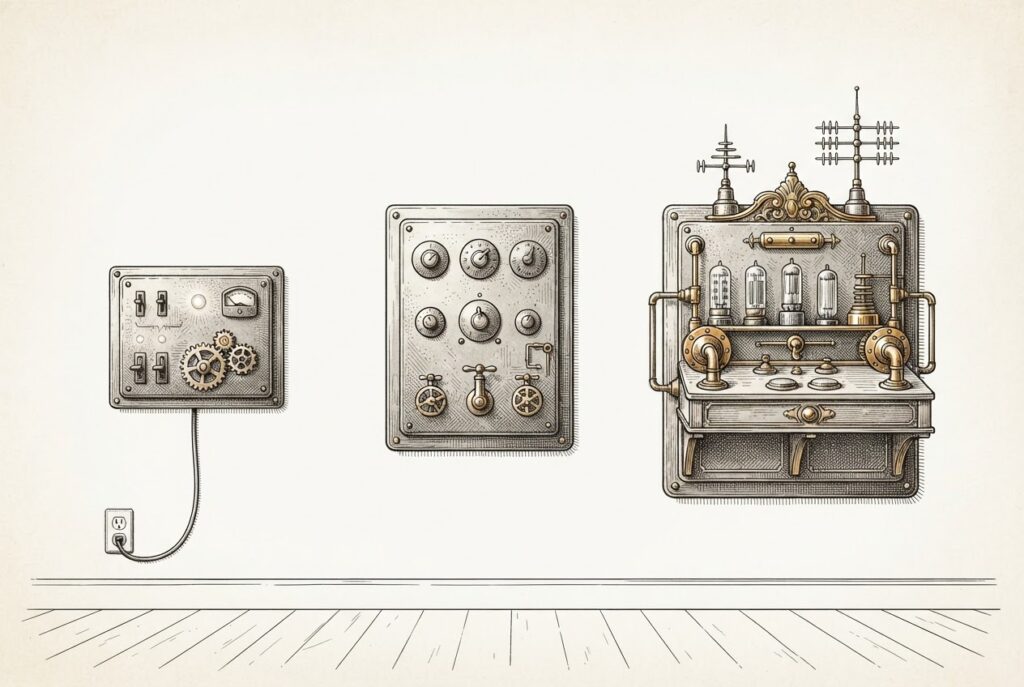
Most smart home owners have reached a breaking point with the subscription-heavy, cloud-dependent status quo. Ugreen, a brand typically associated with charging cables and NAS hardware, is attempting to solve this by moving the entire smart home brain into your living room. At a recent launch event at Gillette Stadium, the company unveiled its new local AI ecosystem, a three-tier hardware lineup that promises to replace recurring cloud fees with a significant upfront investment.
The pricing structure is, to put it mildly, a reality check. The entry-level HomeAgent HA100 starts at an early bird price of $899, eventually climbing to a $1,799 retail tag. If you want the HA100 Pro, you are looking at $2,999 early bird or $5,999 retail. For the true enthusiast-or perhaps the person who just really hates cloud latency-the MasterAgent MA100, powered by an Nvidia Jetson Thor chip, hits a staggering $10,000 early bird price, with a $20,000 retail MSRP. Ugreen’s NAS community manager, Thomas Brown, frames this as a long-term play, suggesting that the upfront cost replaces the hidden tax of recurring cloud token fees. It is a bold argument, but one that requires a significant leap of faith.
Technically, the hardware is impressive on paper. The HA100 offers 26 TOPS of performance, while the MA100 boasts a massive 2,070 TOPS with 128GB of unified memory. They support ONVIF and Matter out of the box, with Zigbee and Thread promised for the future. However, there is a glaring omission: there is no support for Home Assistant. For a product targeting the local AI crowd, this is a critical gap. When you look at competitors like the Anker MindBase, which was also announced this week and explicitly supports Home Assistant and Apple HomeKit, Ugreen’s walled-garden approach feels restrictive.
Then there is the matter of the prototype. Despite the fanfare at Gillette Stadium, Ugreen only had one functional unit on display. Complex features like voice-based rule creation-the very thing that makes AI useful-were not demoed. We are being asked to back a $20,000 piece of hardware via a Kickstarter campaign that runs from September through the end of the year, with shipping slated for January. Crowdfunding a high-end, enterprise-grade price point for a consumer device is, to put it charitably, an unusual strategy.
This is all happening against the backdrop of a broader IFA 2026 moment. From the LG ThinQ Claw to the Anker MindBase and LinknLink HomeClaw, the industry is clearly pivoting toward local processing. It is a necessary evolution for privacy-conscious homeowners who are tired of their devices breaking when the internet goes down or the manufacturer decides to sunset a server.
Ugreen is entering uncharted territory here. They are moving from the world of passive accessories to the role of a central nervous system for the home. They have the encryption protocols-AES-256 local encryption and end-to-end remote access-to back up their privacy claims. But until they can move beyond a single prototype and prove that their software can actually handle the behavioral intent inference and natural language processing they are promising, this remains a high-stakes gamble. For now, the local AI revolution has a price, and it is significantly higher than most of us are used to paying for a smart home hub.