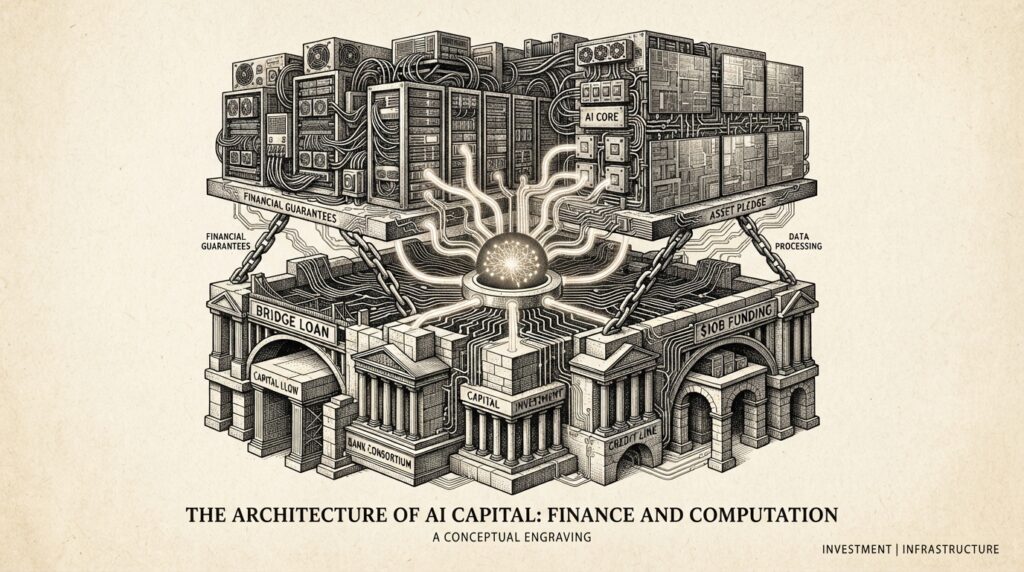
A $965 billion valuation does not buy a single watt of electricity or a square foot of data center floor space. Anthropic, currently preparing for an October 2026 IPO, finds itself in the position of many frontier AI labs: it possesses immense market capitalization but lacks the balance sheet depth to self-fund the physical infrastructure required to sustain its models at scale. The solution, currently taking shape in Hubbard, Texas, is a $15 billion financing package that serves as a primary case study for the evolving architecture of the AI boom. By offloading the capital intensity of its compute requirements onto a consortium led by Nexus Data Centers and backed by Google, Anthropic is pioneering a multi-layered financing model that separates the physical data center from the silicon inside it.
The mechanism relies on a credit substitution model that mirrors the arrangement between Nvidia and OpenAI for their Ohio data center project. According to reports from the Wall Street Journal, the Texas deal involves a $14 billion bridge loan and a revolving credit facility. Crucially, Google is providing financial guarantees covering billions of dollars in lease and power-purchase agreement (PPA) commitments. Should Anthropic default, Google — which already holds a roughly 14 percent equity stake in the lab — steps in to absorb the liability. In exchange for this backstop, Google is expected to secure a 20 percent equity stake in the data center and power project itself, effectively turning the hyperscaler into both a strategic partner and a landlord.
This structure represents a significant evolution from earlier, more monolithic financing attempts. The project has seen a material expansion in scope; while initial reports from the Financial Times in March 2026 suggested a $5 billion investment for 612 megawatts, the current proposal has ballooned to $15 billion and 1.6 gigawatts of capacity. This 2,800-acre site, which includes an on-site, behind-the-meter natural gas power plant, highlights the extreme lengths to which labs must go to secure dedicated energy. The deal is further bifurcated by a separate vendor-financing agreement with Broadcom for custom tensor processing units (TPUs), co-designed by Google and Broadcom. By splitting the compute stack into two distinct layers — the data center consortium for the shell and power, and vendor financing for the chips — Anthropic is insulating its IPO-bound balance sheet from the most volatile capital expenditures.
The Texas project sits within a broader, rapidly maturing ecosystem of AI infrastructure finance. It echoes the Meta and BlackRock $14 billion private equity co-funding model in El Paso, and the sovereign-land approach seen in the Brookfield and NextEra $100 billion DOE Paducah project. However, the Anthropic deal introduces a unique structural complexity: Morgan Stanley is simultaneously leading the Nexus financing syndicate and serving as a lead banker for Anthropic’s upcoming IPO. This dual role raises structural questions regarding the alignment of incentives and the transparency of risk pricing for potential public market investors, particularly as the deal terms remain in the advanced negotiation phase.
The reliance on Nexus Data Centers, a developer with a limited public track record in large-scale hyperscale projects, adds another layer of uncertainty to the project. While the involvement of a major bank consortium and Google’s guarantees provide a veneer of stability, the sheer scale of the 1.6 gigawatt requirement creates significant operational risk. If the infrastructure fails to deliver the promised compute, or if the power generation costs exceed projections, the financial guarantees will be tested. For now, the deal serves as a blueprint for how frontier labs intend to bridge the gap between their astronomical valuations and the grounded, capital-intensive reality of building the hyperscale compute infrastructure of the future.