At Cognition Labs, 89% of the code committed by the company’s own engineers is now written by Devin – not a human finger on the keyboard. That figure, reported by TechCrunch in May 2026, has fueled a revenue trajectory that reads like a typo: $37 million in annualized revenue in May 2025, $492 million a year later. A Series D round that month valued the company at $26 billion. The industry has moved past treating AI coding agents as novelties.
The platform has evolved from a code-writing demo into a full-lifecycle system. Devin now finds and validates security vulnerabilities through its Security Swarm, launched July 1, 2026. With the acquisition of TierZero two weeks later, it also handles production operations – incident investigation, alert triage, CI/CD failure diagnosis, and human-approved rollbacks. The same week, Cognition achieved FedRAMP High In-Process status, clearing the path for autonomous AI engineering inside US federal agencies and military systems.
The public sector is already testing the premise. The Sapporo city government modernized over one million lines of legacy code in roughly a quarter of the estimated manual time – 50 engineering months instead of 200. Locals call the agent ‘Devin-kun.’ For large enterprises, the goal is scale: Goldman Sachs is piloting the technology with 12,000 developers, aiming for 3-4x productivity gains as it scales from hundreds to thousands of active agents.
But the day-to-day reality for those engineers is shifting. The work is moving away from writing code and toward supervising the agent that writes it. Engineers describe problems in plain language, convert them into prompts, and then validate what comes back. The human role is becoming architectural – defining constraints, reviewing output, catching what the agent gets wrong – while the agent handles the repetitive implementation work that used to fill the day.
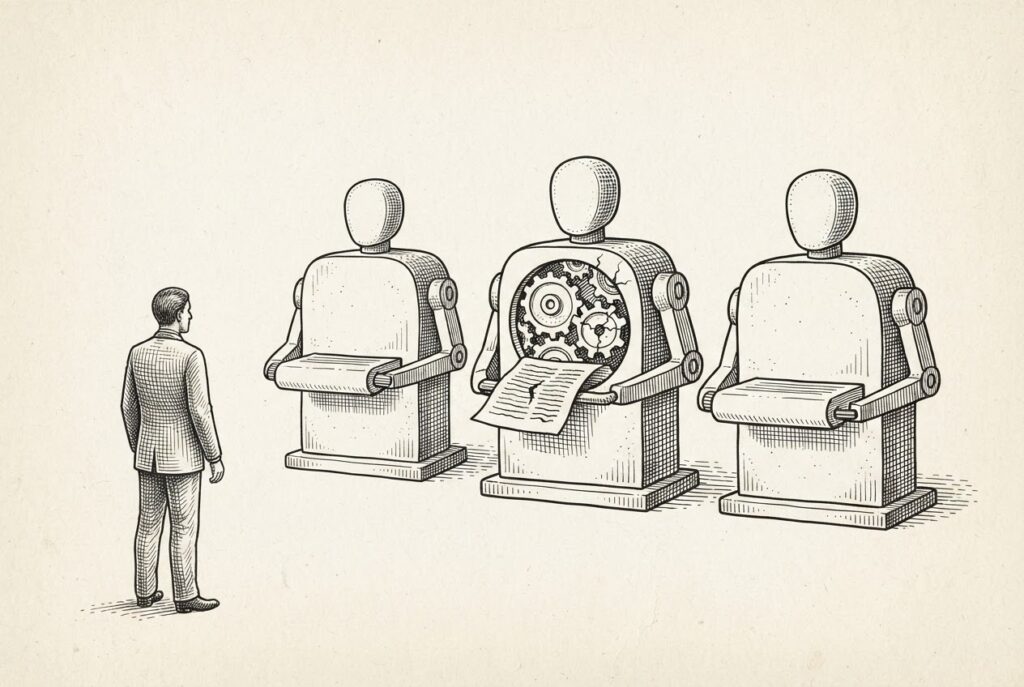
That shift introduces a cost the productivity headlines don’t capture: the babysitting tax. Developers who have worked with autonomous coding agents report spending significant time steering and correcting the system, sometimes more than it would have taken to write the code themselves. The friction is compounded by what testers call ‘confident hallucinations’ – the agent generates plausible, well-structured code that calls API methods that don’t exist in the library version the project uses, or references files that aren’t there. Cognition’s own early internal testing showed Devin solved only about 14% of GitHub issues unassisted. Performance degrades sharply on codebases exceeding 500,000 lines. Newer models like SWE-1.7, launched July 13, claim frontier-level capability at lower cost – but the structural gap between a demo and a production codebase hasn’t closed yet.
The hiring data tells a quieter story than the headlines suggest. Total engineering headcount at major tech firms was down 11% in 2025 compared to 2019 – but the share of engineers within those companies actually rose from 46% to 55% of all hires. Companies aren’t eliminating engineering roles wholesale. They’re becoming more selective, prioritizing people who can manage AI-integrated workflows and navigate the friction of agent supervision over those whose primary skill is writing code by hand.
The babysitting tax is the new baseline for engineering labor, not a temporary hurdle. As Cognition expands from coding into security and production operations – and as competitors like Anthropic and Google push their own agent architectures – the value of a human engineer is shifting from the ability to write syntax to the ability to manage what autonomous systems produce. The productivity gains are real, but they come with a trade: the engineer’s job is no longer to build. It’s to supervise, validate, and absorb the cost when the agent confidently gets it wrong.