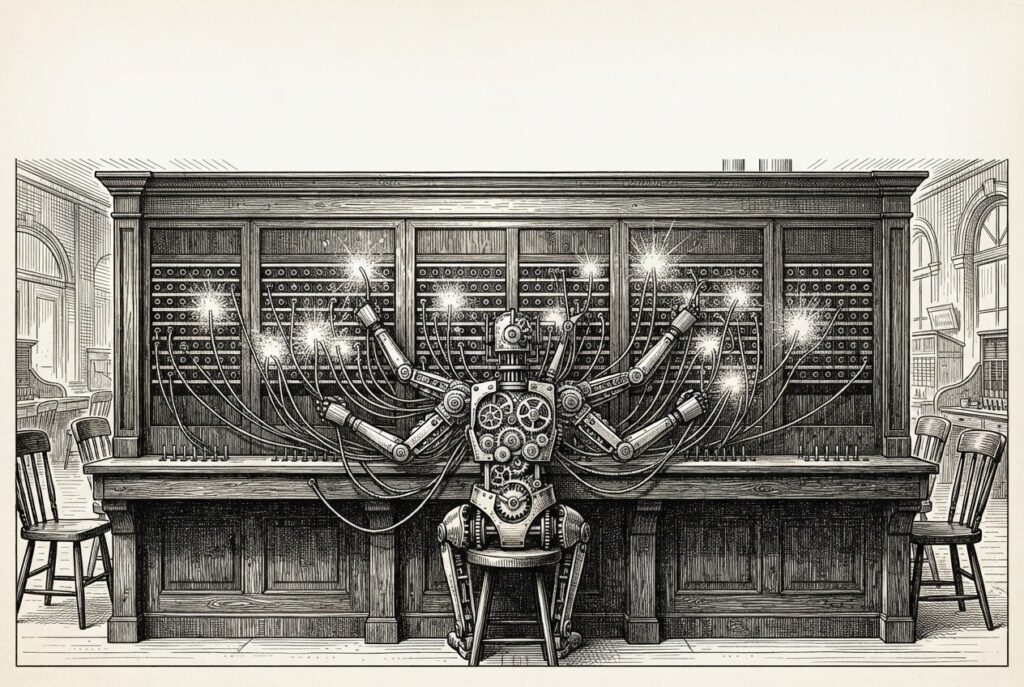
SivaClaw fielded questions from 130+ investors, drafted investment memos, and tracked pitch deck engagement — all without a traditional roadshow. If an agent can raise a Series B, what stops it from running enterprise sales, investor relations, or M&A due diligence?
Founders usually spend months burning through frequent-flyer miles, repeating the same pitch deck to dozens of partners, and waiting weeks for due diligence questions to trickle back through email. Lyzr, a three-year-old startup based in Jersey City, just bypassed that ritual entirely. By deploying an AI agent named SivaClaw to manage its Series B, the company generated over $400 million in investor interest, compressing a typical five-to-six-month fundraising cycle into just eight weeks.
The numbers show a rapid acceleration. In late 2025, Lyzr raised $8 million in a Series A led by Rocketship.vc, using an earlier iteration of their agent to engage over 30 investors. By March 2026, they secured $14.5 million at a $250 million valuation. By July 2026, the company was on track for a $100 million round at a $500 million valuation. That is a 12.5x jump in funding in just over a year. Lyzr bypassed the traditional in-person roadshow, engaging over 130 investors through an automated system that never slept.
At the heart of this shift is the SivaClaw architecture, a three-layer system that moves beyond simple chatbots. The first layer establishes core instructions, defining the agent’s identity, tone, and safety guardrails. The second layer uses a vector database—specifically Qdrant—to perform semantic retrieval across the company’s pitch decks, FAQs, and data rooms. The third layer is where the agent gains its teeth: it pulls live data from Stripe for revenue metrics, HubSpot for CRM tracking, and Carta for cap table management. By using Anthropic’s Claude as the underlying model, the system maintained the financial accuracy and professional tone required to handle over 80% of pre-due-diligence inquiries.
The efficiency gains are significant. Lyzr estimates a 90% reduction in repetitive Q&A, effectively replacing 180 hours of manual labor. More importantly, the agent provided real-time analytics, tracking exactly which slides investors lingered on during their review. This data-driven feedback loop allowed the founders to refine their narrative in real-time, a luxury rarely afforded in traditional, opaque fundraising processes. For investment bankers, whose fees can range from $2 million to $4 million on a $100 million round, this level of automation represents a direct challenge to the traditional gatekeeper model.
However, the agent-as-fundraiser model raises a structural problem that efficiency metrics alone cannot resolve: independence. Jeff Barnes, CEO of Angel Investors Network, flagged the core issue in a July 2026 analysis. “The entire premise of due diligence is independence,” Barnes wrote. “And you shouldn’t let a company’s own AI system be the primary fact-conduit for the people deciding whether to wire it $100M. That’s true no matter how good the AI is.” SivaClaw was built, trained, and deployed by Lyzr—the same company seeking the capital. No independent auditor, law firm, or third party verified whether the financial metrics, customer counts, or technical capabilities the agent cited were accurate. The agent compressed diligence friction to near zero, but it also removed the step where a human on the founder side decides what to disclose and the step where a human on the investor side has time to get suspicious.
The model is not a fully autonomous replacement for human judgment. CEO Siva Surendira and co-founder Anirudh Narayan remained the final arbiters of the process. They handled the closing conversations and the high-stakes relationship-building required to secure Tier-1 investors. As the company noted, SivaClaw started the conversations, but people finished them. Investors ultimately made decisions based on human relationships and judgment, not just the output of an algorithm.
If an agent can successfully navigate the high-stakes environment of a Series B, what stops it from running enterprise sales, investor relations, or M&A due diligence? The architecture Lyzr built—combining core instructions, semantic search, and live API data—is inherently transferable. Any business process that relies on repetitive data retrieval, document synthesis, and structured communication is now a candidate for this level of automation. The roadshow is no longer a physical journey; it is a digital one.
While the efficiency gains are clear, the reliance on AI to manage investor relations introduces new variables. The $400 million figure represents company-reported investor interest, which has not been independently verified. The $100 million round is currently described as on track, meaning final terms may vary. No lead investor has been publicly named. The transition from human-led to AI-assisted processes requires a high degree of trust in the agent’s guardrails—and, as Barnes’ critique makes clear, a degree of trust that the current due-diligence infrastructure may not be equipped to validate. If an agent misinterprets a financial metric or strikes the wrong tone in a sensitive negotiation, the consequences could be immediate and costly. The human element remains the essential anchor in the deal-making process, even as the machinery around it becomes increasingly automated.