Site icon Forkast

Chinese AI Models Now Capture Up to 46% of US Enterprise Token Usage

For every week since February 8, 2026, Chinese-origin AI models have accounted for at least 30% of the enterprise token volume on OpenRouter. By mid-2026, that share reached a weekly peak of 46%, according to a CNBC investigation published July 7. That figure stood at 11% averaged over the prior twelve months — and just 4.5% in the first half of 2025. The scale of this shift is underscored by the growth of OpenRouter itself, which expanded from roughly 5 trillion tokens per week in April 2025 to over 20 trillion by April 2026.

Open-source Chinese models are consistently 60% to 90% cheaper than the leading offerings from Anthropic and OpenAI, according to Justin Summerville of OpenRouter. As of June 2026, the pricing gap is stark: DeepSeek V4 Flash costs $0.14 per million input tokens, while OpenAI’s GPT-5.5 is priced at $5.00. For high-volume enterprise users, these differentials — ranging from 4x to 100x cheaper — are difficult to ignore. During the week of February 9-15, 2026, this cost-efficiency pushed Chinese models to 4.12 trillion weekly tokens, surpassing US models for the first time.

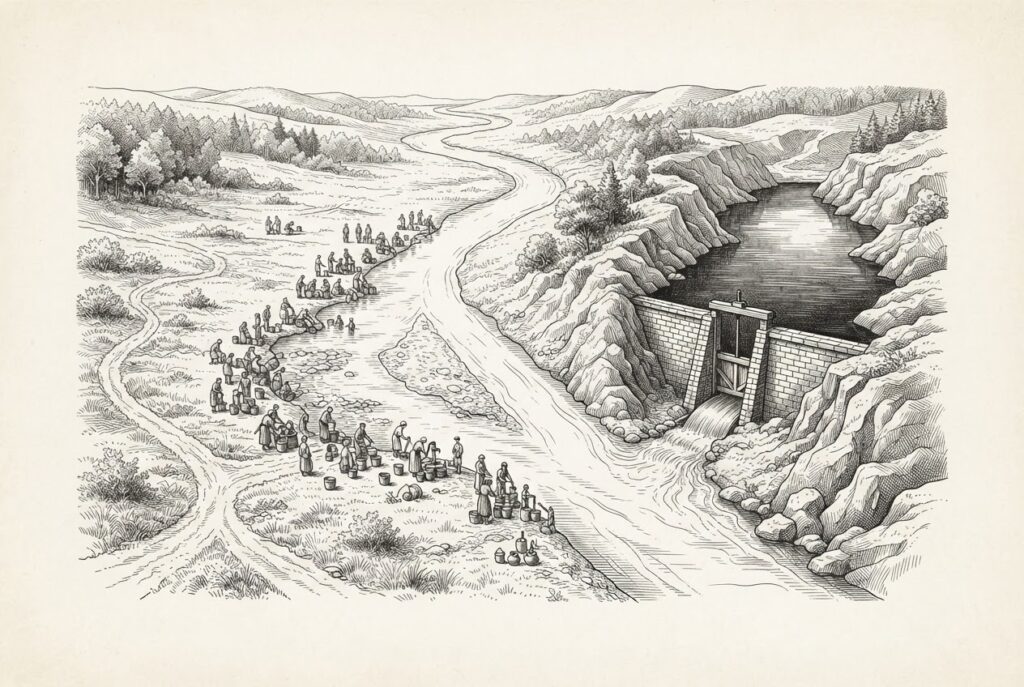
The U.S. government restricts access to frontier models like GPT-5.6 Sol to a select group of approximately 20 vetted organizations. GPT-5.6 launched publicly on July 9 with a tiered structure — Terra and Luna are accessible, while Sol’s most sensitive capabilities remain permanently gated behind federal clearance. Yet enterprises are effectively routing around these constraints. The structural contradiction is clear: as the U.S. tightens access to its most advanced domestic models, the market is gravitating toward Chinese alternatives that are not only available but significantly more affordable.

DeepSeek recently became the number one trending software vendor on the Ramp index, signaling that these models are moving from sandbox testing into formal corporate expense reports. Ramp’s chief economist, Ara Kharazian, has identified cost awareness as the primary catalyst for this adoption. Companies are prioritizing the bottom line, and the performance gap between Chinese and American models is narrowing enough to make the cost savings the deciding factor for many procurement teams.

The provider breakdown tells the story at a granular level. DeepSeek holds 17.6% of OpenRouter’s routed tokens, amounting to 5.13 trillion weekly — the single largest vendor on the platform. Alibaba’s Qwen follows at 13.9% with 2.77 trillion tokens weekly. In the broader landscape, Chinese-origin models now account for 46.4% of routed tokens, compared to 35.7% for US-origin models. Anthropic, the largest US-origin provider, captures just 14.8%.

This reliance introduces a new layer of operational risk. The June 12 suspension of Anthropic’s Fable 5 and Mythos 5 models under U.S. export-control directives established a precedent for government-mandated model shutdowns — the first known case of a government forcing a global model takedown. While those models were restored on July 1, the incident highlighted the fragility of relying on any single provider in a landscape where geopolitical friction can trigger sudden service interruptions. Enterprises choosing Chinese models are balancing the immediate benefit of lower costs against the potential for future regulatory or geopolitical volatility.

By creating a tiered economy where the most capable models are locked behind federal clearance, the government has inadvertently incentivized a shift toward external, lower-cost alternatives. The data from OpenRouter suggests that when the cost of compliance or the cost of access becomes too high, the market will find a way to bypass the gate. The question is no longer whether enterprises will use these models, but how the U.S. will reconcile its restrictive domestic policy with a global market that is increasingly indifferent to those boundaries.

Exit mobile version